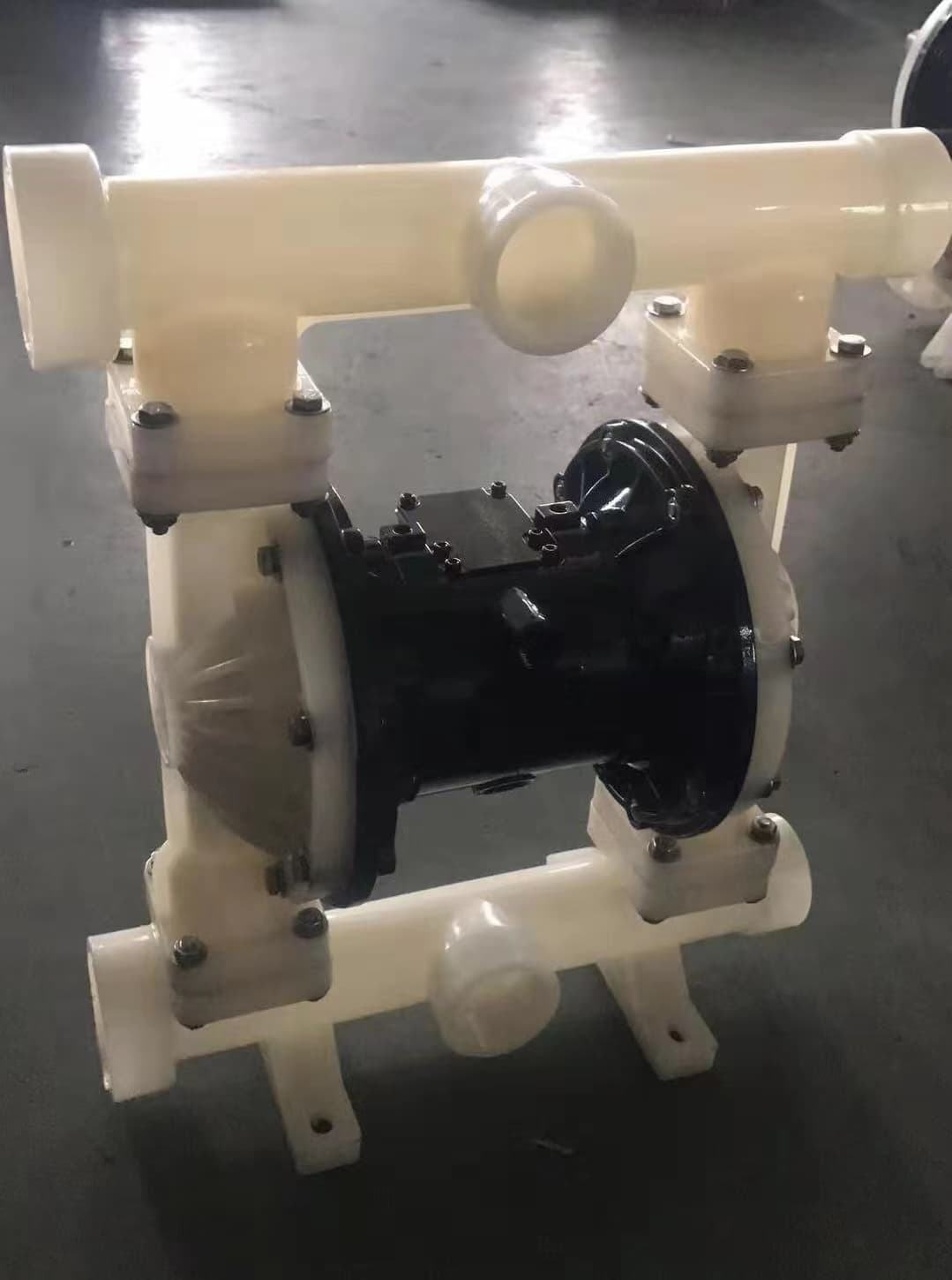
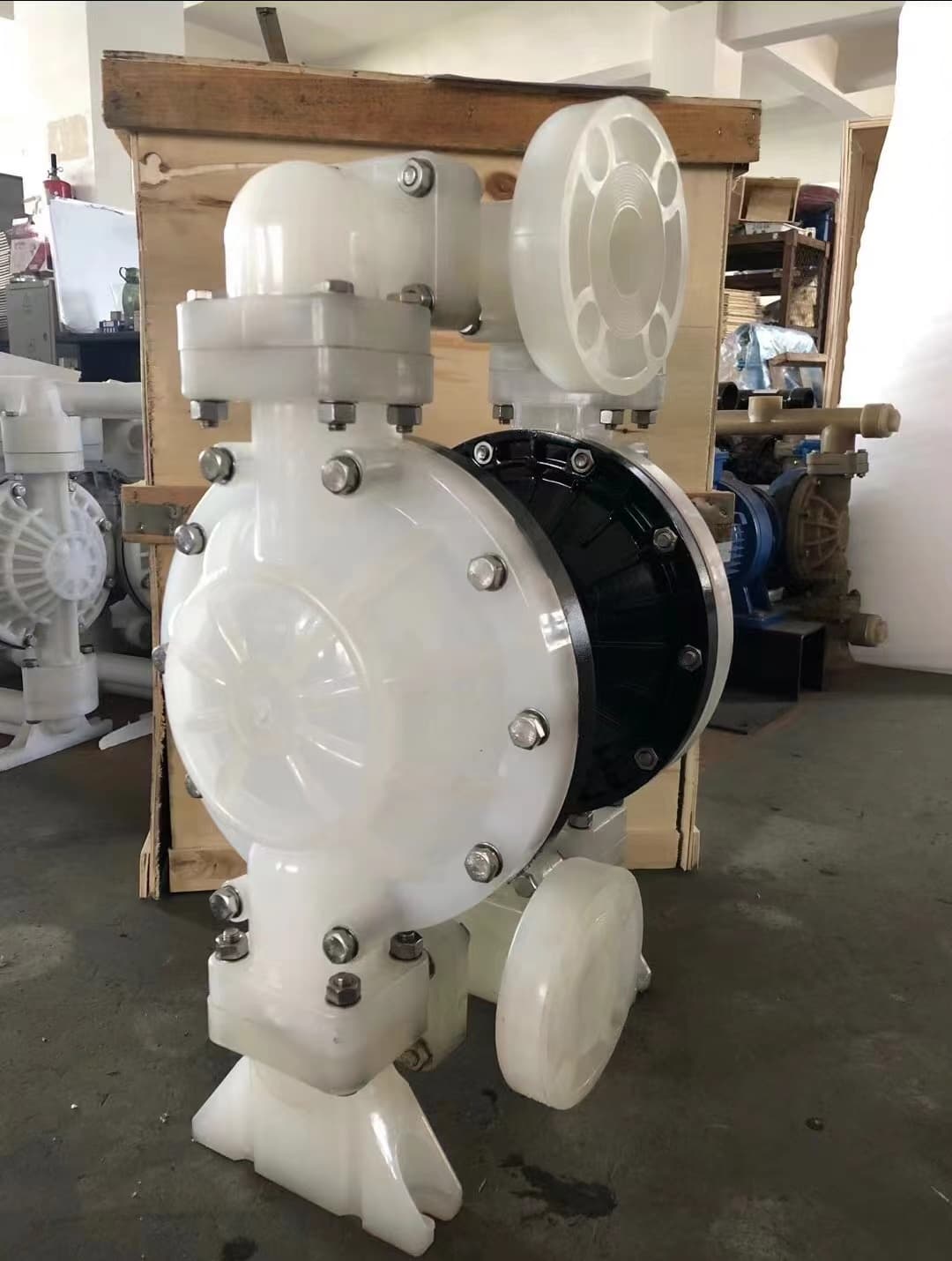
QBY Air-Operated Diaphragm Pump – How It Works & Where It Wins
Understanding how a QBY works explains why it handles jobs other pumps cannot. It is a positive-displacement pump with two symmetrical chambers, each holding a flexible diaphragm; a connecting rod lin…
Understanding how a QBY works explains why it handles jobs other pumps cannot. It is a positive-displacement pump with two symmetrical chambers, each holding a flexible diaphragm; a connecting rod links the two diaphragms into one moving assembly.
The cycle
Compressed air enters the distribution valve and pushes one diaphragm; the linked diaphragm moves with it, while air behind the second chamber exhausts. At the end of the stroke the valve switches the air to the other chamber and the diaphragms reverse. Two ball check valves in each chamber open and close in turn, so fluid is drawn in on one side and pushed out on the other — continuously.
Why that matters
Because suction is created mechanically on every stroke, the pump self-primes and runs dry. Because the drive is air, there is no spark and no heat build-up. And because the diaphragms seal the fluid off completely, there is nothing to leak — the reasons a QBY suits corrosive, particle-laden, volatile and shear-sensitive fluids alike.
Applications: corrosive liquids, particle-laden fluids, high-viscosity media, volatile and flammable liquids, toxic media, food and slurry transfer
QBY Pneumatic Diaphragm Pump Technical Parameters
Parameter
Specification Range
Flow Rate
0 – 30 m³/h
Max Head
0 – 50 / 70 m
Port Size (Caliber)
10 – 100 mm
Working Temperature
-15℃ ~ +150℃
Working Air Pressure
0.1 – 0.7 MPa
Self-Priming Height
5 – 7 m
Max Passable Solid Particle
10 mm
HAQUANPUMP builds the full QBY range in-house. Send us your fluid, flow and head, and we will recommend the exact model, body material and diaphragm for the job.
How much does a QBY air diaphragm pump weigh, how is it packed, and how fast can it ship? Real figures from our orders, plus the spares to order with it.

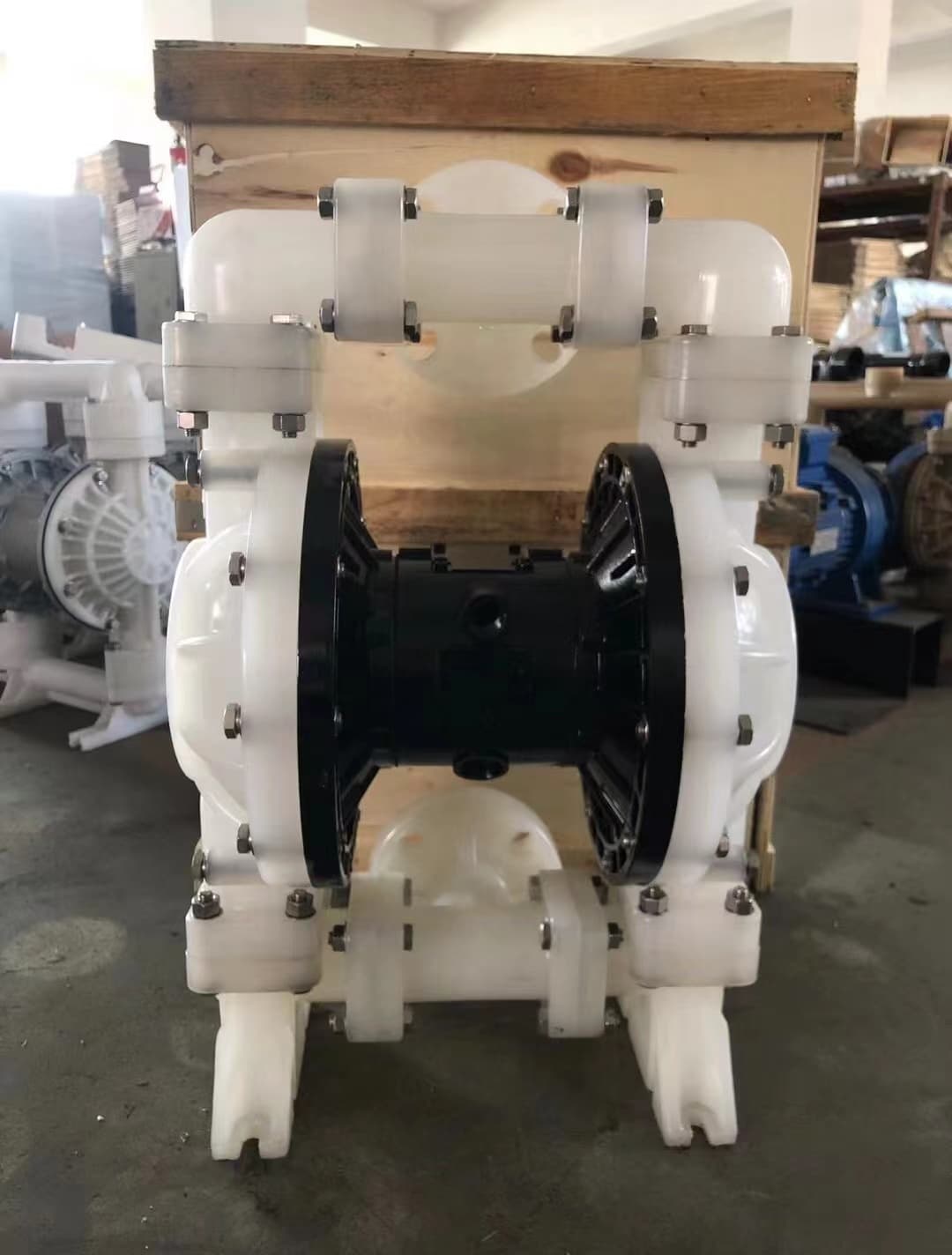
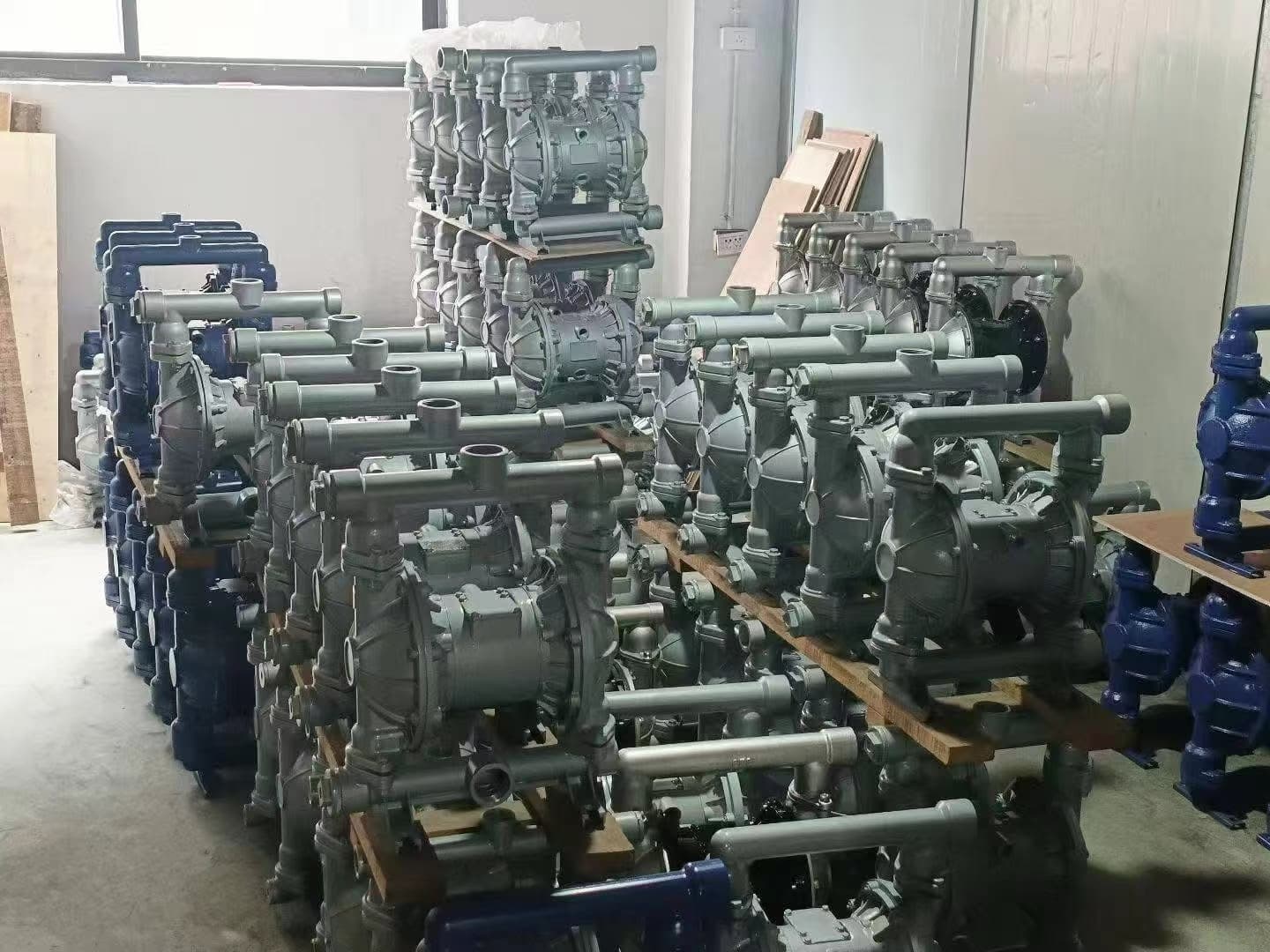 QBY Air-Operated Diaphragm Pump (AODD)