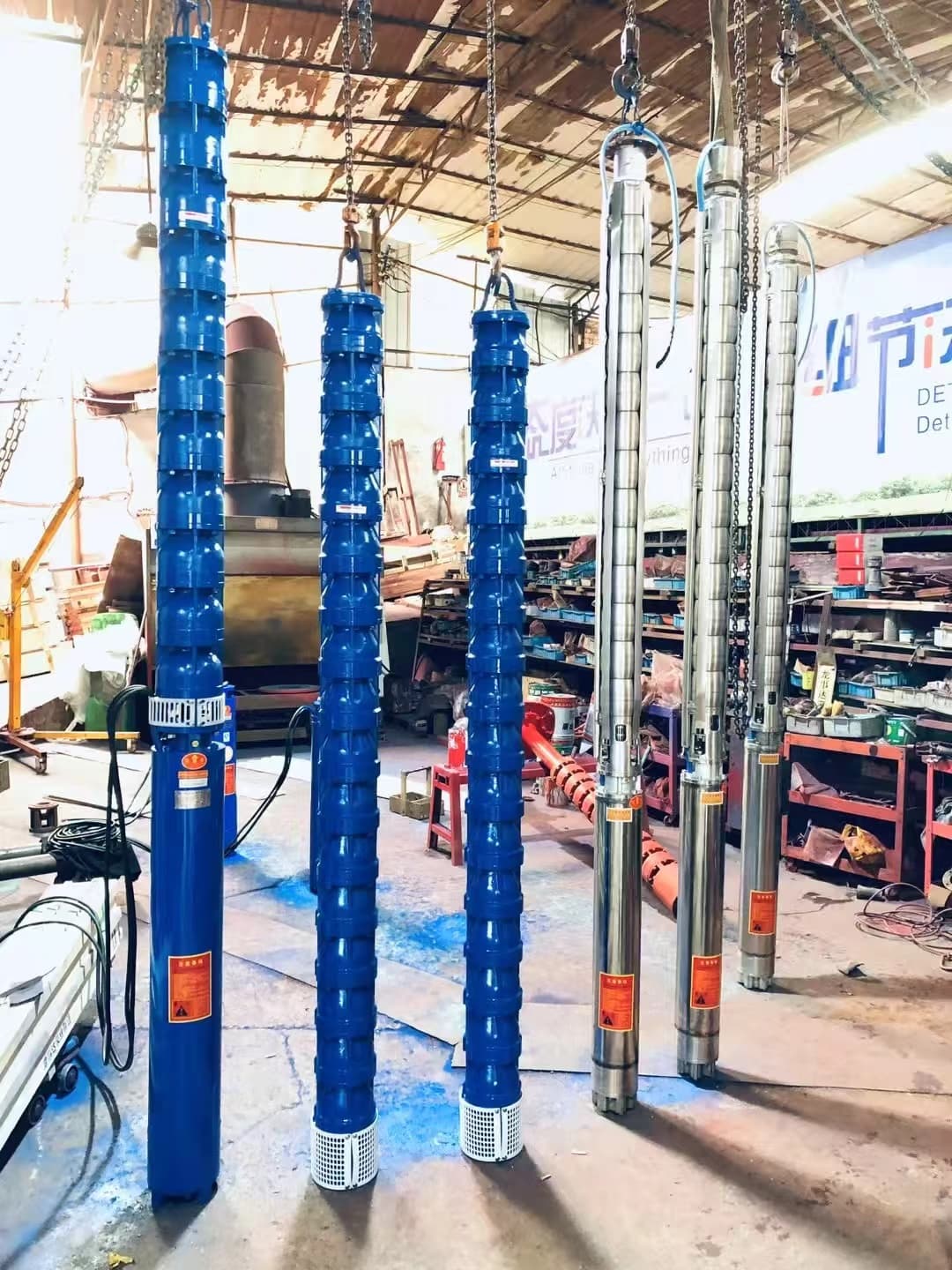
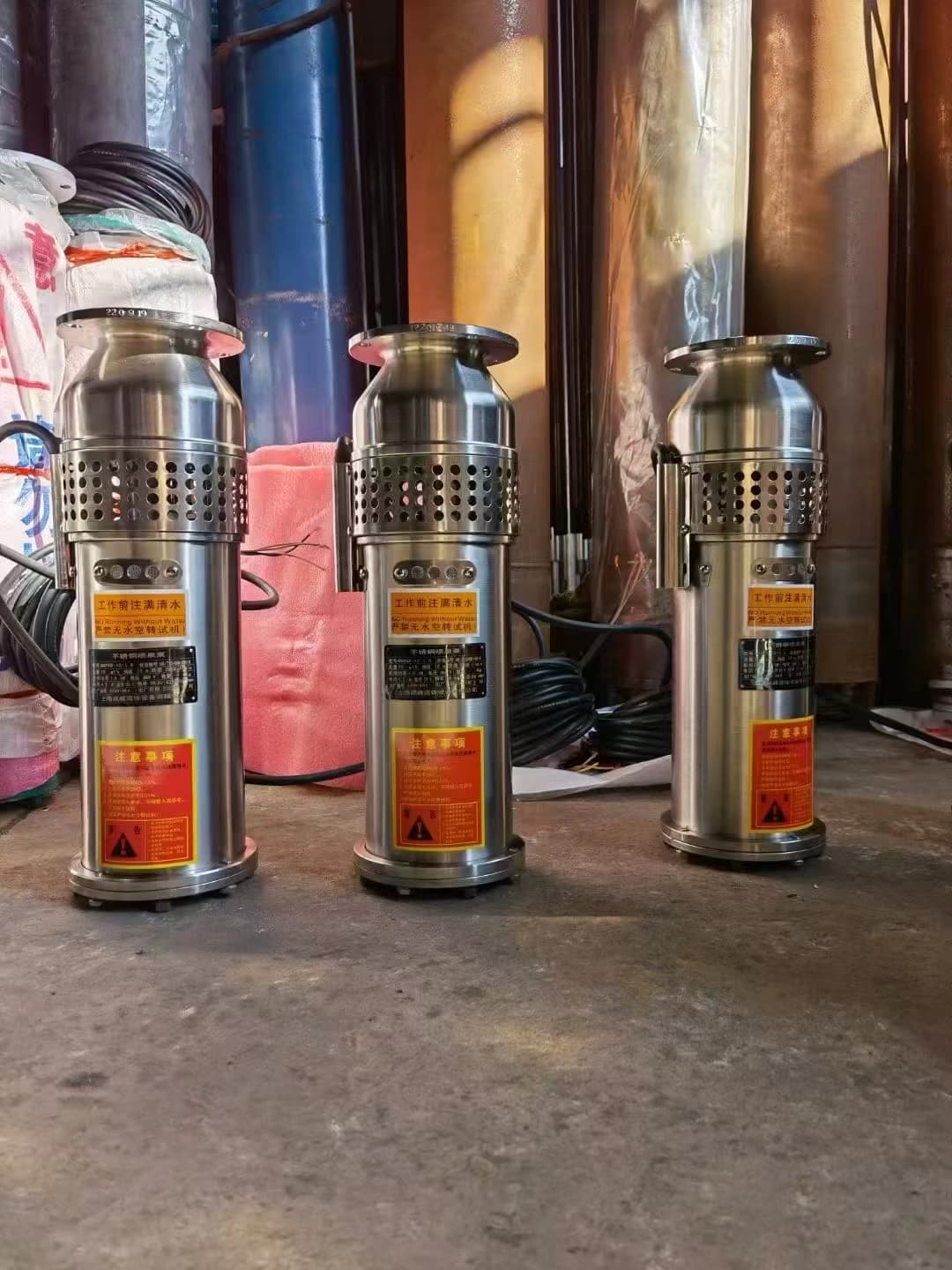
Head is where most borehole pumps are mis-sized. The pump has to lift water from where the level settles while pumping, not from where it stands at rest. Here is an example.
The well
- Well inside diameter: 150 mm
- Static water level (pump off): 35 m below ground
- Dynamic water level (pump running at the duty flow): 48 m below ground
- Required flow: 20 m³/h into a tank whose inlet is 12 m above ground
The calculation
- Lift inside the well, from the dynamic level to the ground: 48 m
- Height above ground to the tank inlet: 12 m
- Pipe and fitting losses in the riser and the delivery line: in this example, 6 m. Work this out for your own pipe with our head calculator
- Total head: 48 + 12 + 6 = 66 m
Choosing the pump
A 150 mm well and 20 m³/h point to the 150QJ20. The nearest models are the 150QJ20-65/10 (65 m, 7.5 kW) and the 150QJ20-72/11 (72 m, 7.5 kW). With 66 m required, the 72 m model gives a little margin at the same motor size.
Setting depth
The inlet must sit at least 1 m below the dynamic level, so here below 49 m. Leave the motor at least 1 m above the bottom of the well, and do not set the pump more than 70 m below the static level.
Run your own figures in our head calculator, then compare them with the QJ selection table.

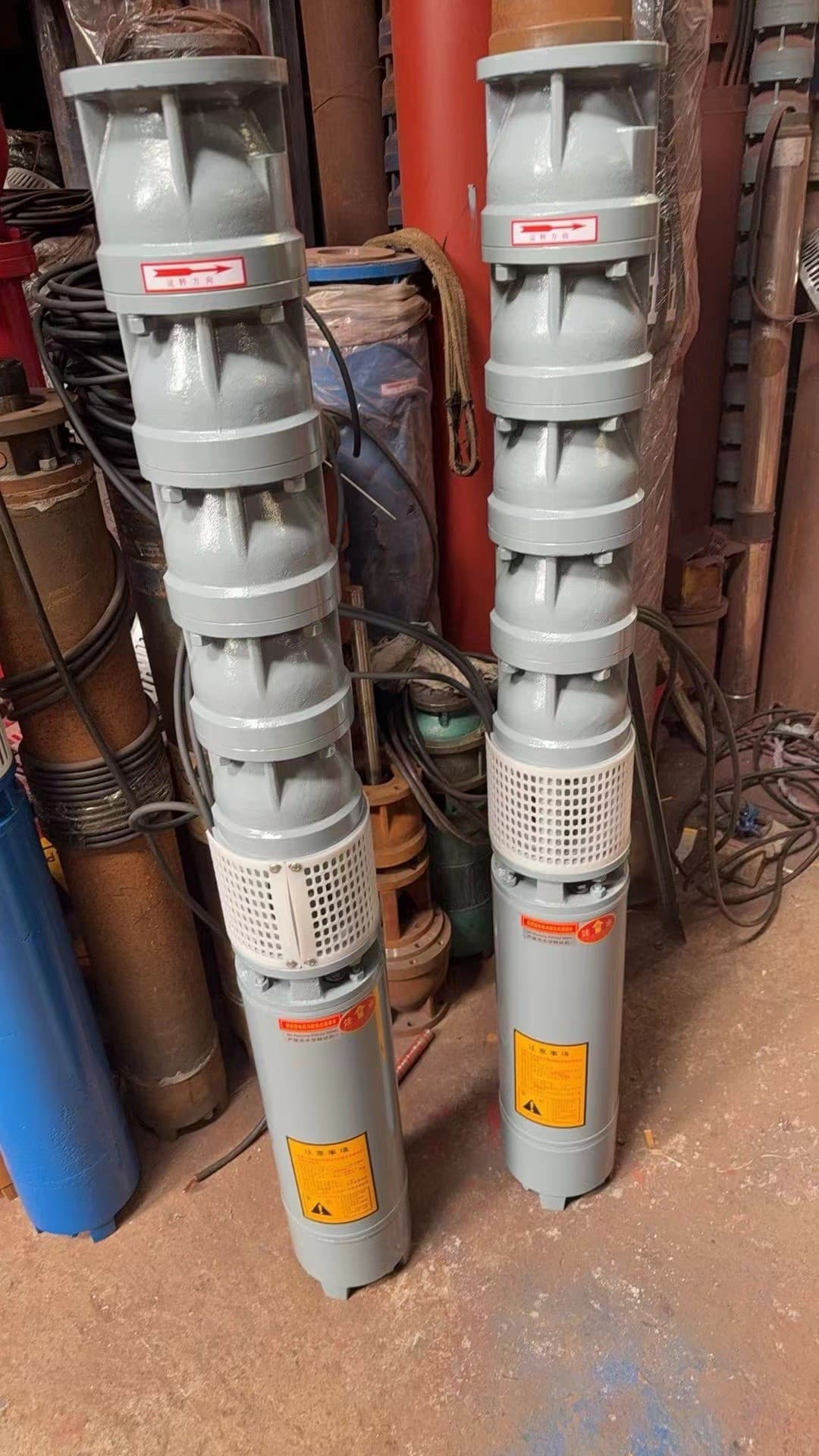
 Deep Well Pumps