
Reading a Pipeline Pump Curve: Three Duty Points from Our Table
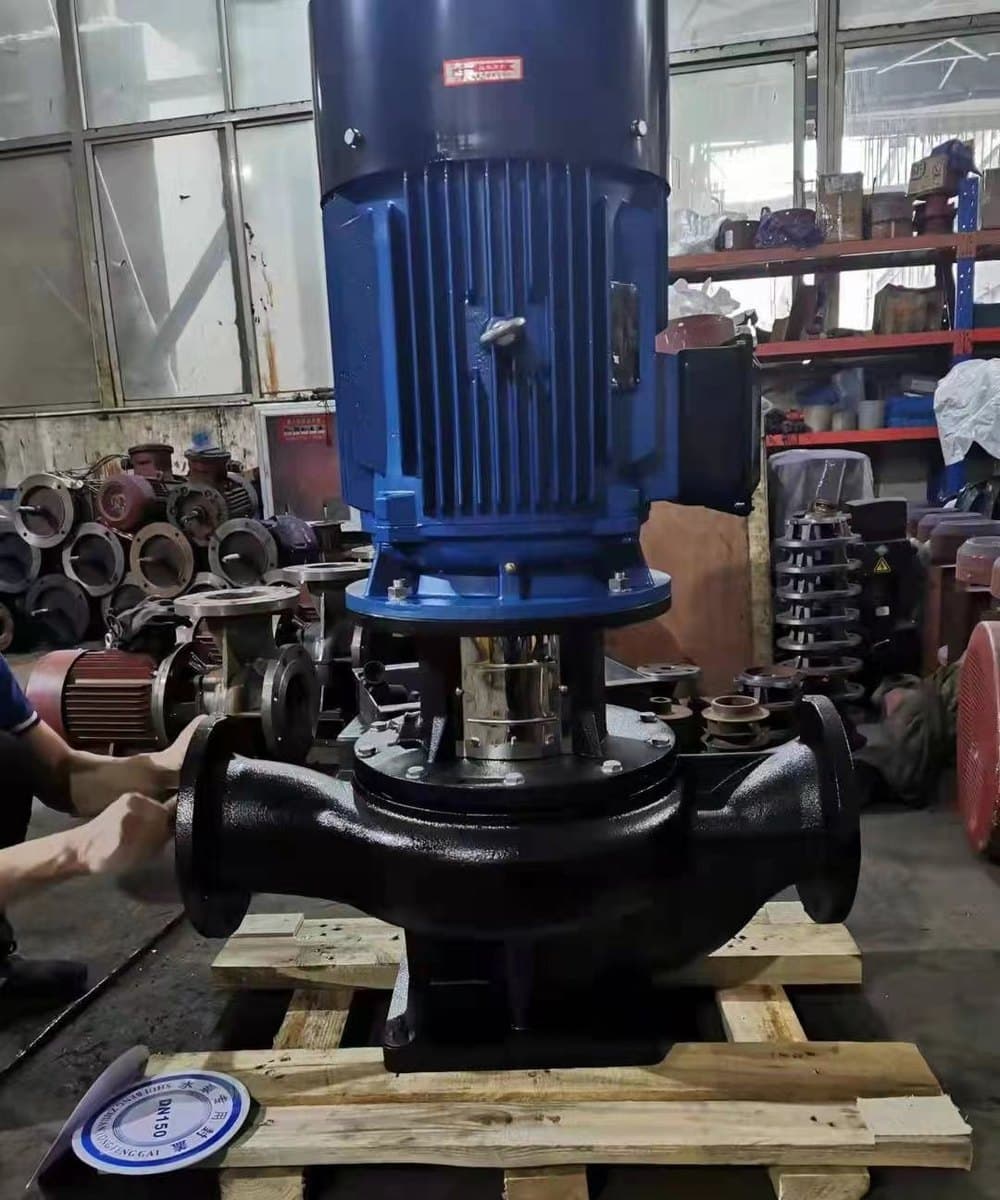
Each build in our catalogue is listed with three duty points: a low flow, the rated flow and a high flow. Together they sketch the pump curve. Take the 50-160 at 2900 r/min.
| Flow (m³/h) | Head (m) | Efficiency (%) |
|---|---|---|
| 8.8 | 33 | 45 |
| 12.5 | 32 | 52 |
| 16.3 | 30 | 51 |
What the figures tell you
- Head falls as flow rises. The pump does not have one fixed flow; it finds the point where its curve meets the system’s resistance
- Efficiency peaks near the rated point and drops on either side. That peak is where the pump wears least and uses power best
- Power rises with flow. At zero flow the pump still uses a large share of its power, all of it turning into heat
Where to run
Aim for the duty to sit between the low and high points listed, ideally close to the rated one. Running at a nearly closed valve heats the water in the pump; running far beyond the high point risks cavitation and overloading the motor.
Work out your system head with the head calculator, then pick the build in the selection table.
Products in This Series
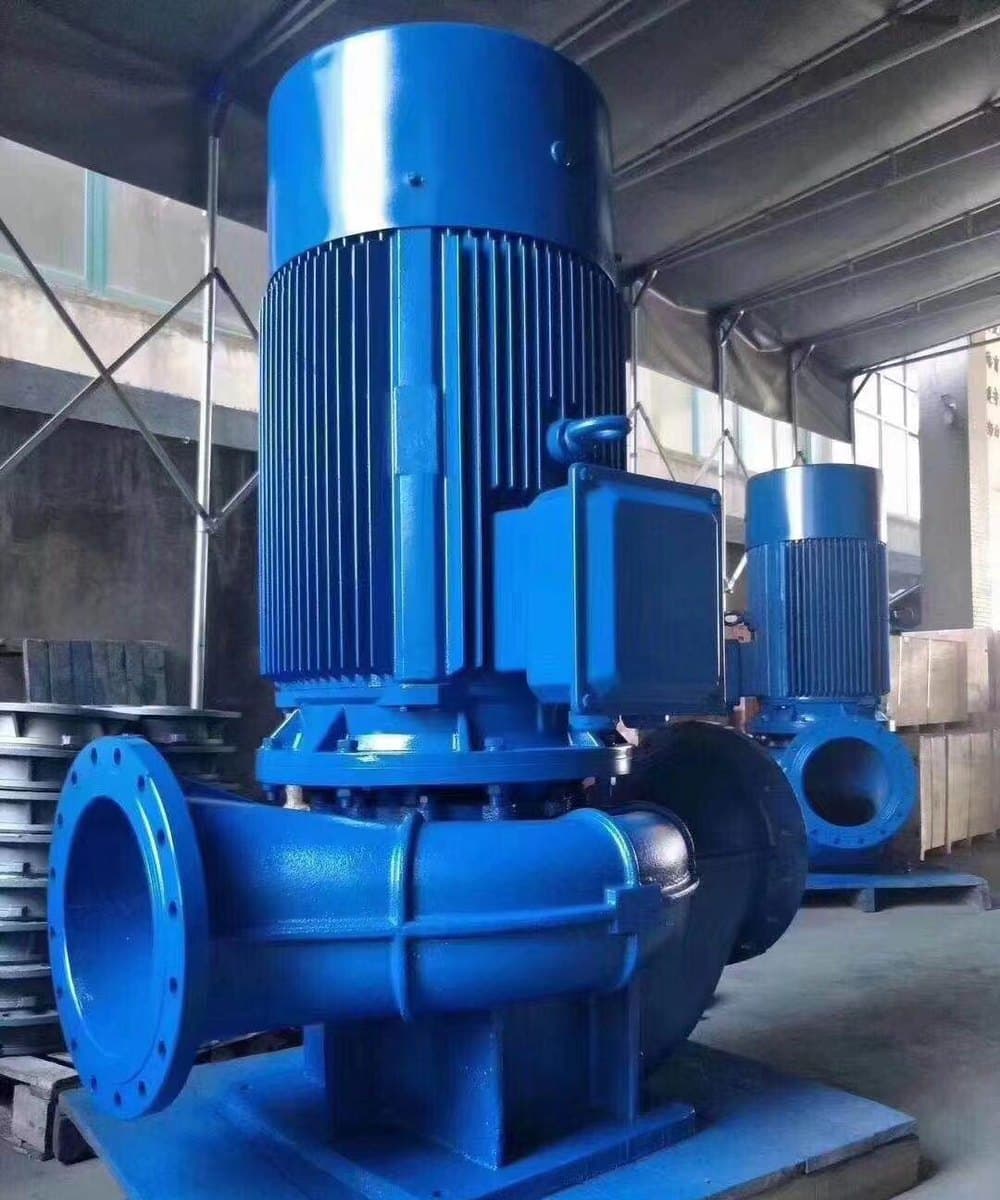 Pipeline Centrifugal Pumps & CDL Multistage Pumps
Pipeline Pumps for HVAC Chilled and Condenser Water Circulation
Vertical inline pumps for chilled water and condenser water loops in HVAC systems: what sets the flow and head, and why closed-loop pressure matters.
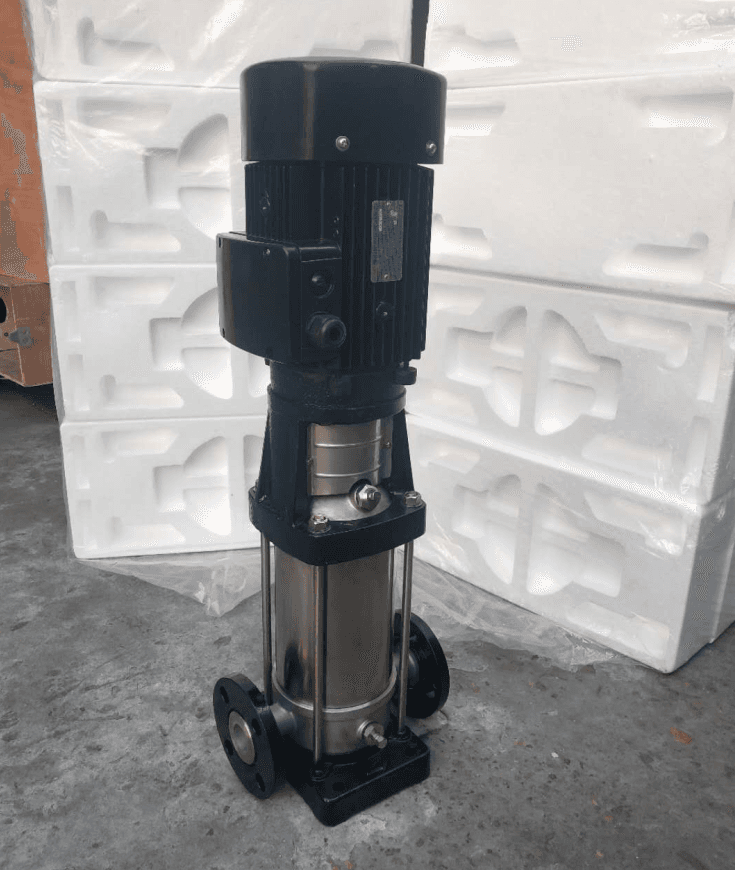 Pipeline Centrifugal Pumps & CDL Multistage Pumps
60 Hz and Special Voltage Pipeline Pumps and CDL Multistage Pumps
Pipeline and multistage pumps for 60 Hz and 380, 440 or 460 V supplies. Why a 50 Hz pump overloads on 60 Hz and what to send us.
Pipeline Centrifugal Pumps & CDL Multistage PumpsA, B and C Trimmed Impellers: Matching a Pipeline Pump to the Duty
The A, B and C at the end of a pipeline pump model mark trimmed impellers. How trimming lowers head and power, with the 40-250(I) family as an example.
Need a pump for your application?
Our engineers respond to technical inquiries within 24 hours.
Get a Quote