One of the first questions buyers ask about a self-priming pump is simple: how far below the pump can the water sit and still get pumped? For the ZWL direct-coupled self-priming sewage pump, the self-priming height is 4.5–5.5 m. Here’s how to read that and how to make sure it primes reliably.
What 4.5–5.5 m means
That’s the vertical distance the pump can lift liquid on the suction side to prime itself. It varies a little by model and conditions, but the family is rated in that band. In practice it covers most real setups — a pump on a bank above a pond, beside a wet well, or on the edge of a pit — where the liquid sits a few metres below the pump.
The important thing: don’t design right at the top of the rating. Give yourself margin. Mount the pump as close to the liquid as you reasonably can, and it primes faster and more reliably.
Setting up the suction line
Priming problems almost always trace back to the suction side, so get these right:
- Keep the suction lift within the rating (ideally below 5.5 m), and keep the suction pipe short — up to about 10 m of run.
- Make it airtight. Any air leak on the suction side stops it priming — this is the number-one cause of “won’t prime.”
- Fit a strainer with an open area about 2–3 times the pipe’s cross-section, so it doesn’t restrict flow.
- Fill the pump body first. On the very first start, add liquid to at least two-thirds of the pump body through the filling valve. After that it primes itself.
Suction & duty range
- Self-priming height: 4.5–5.5 m
- Suction pipe length: up to ~10 m
- Flow rate: 8–800 m³/h
- Head: 10–80 m
- Material: cast iron or stainless steel

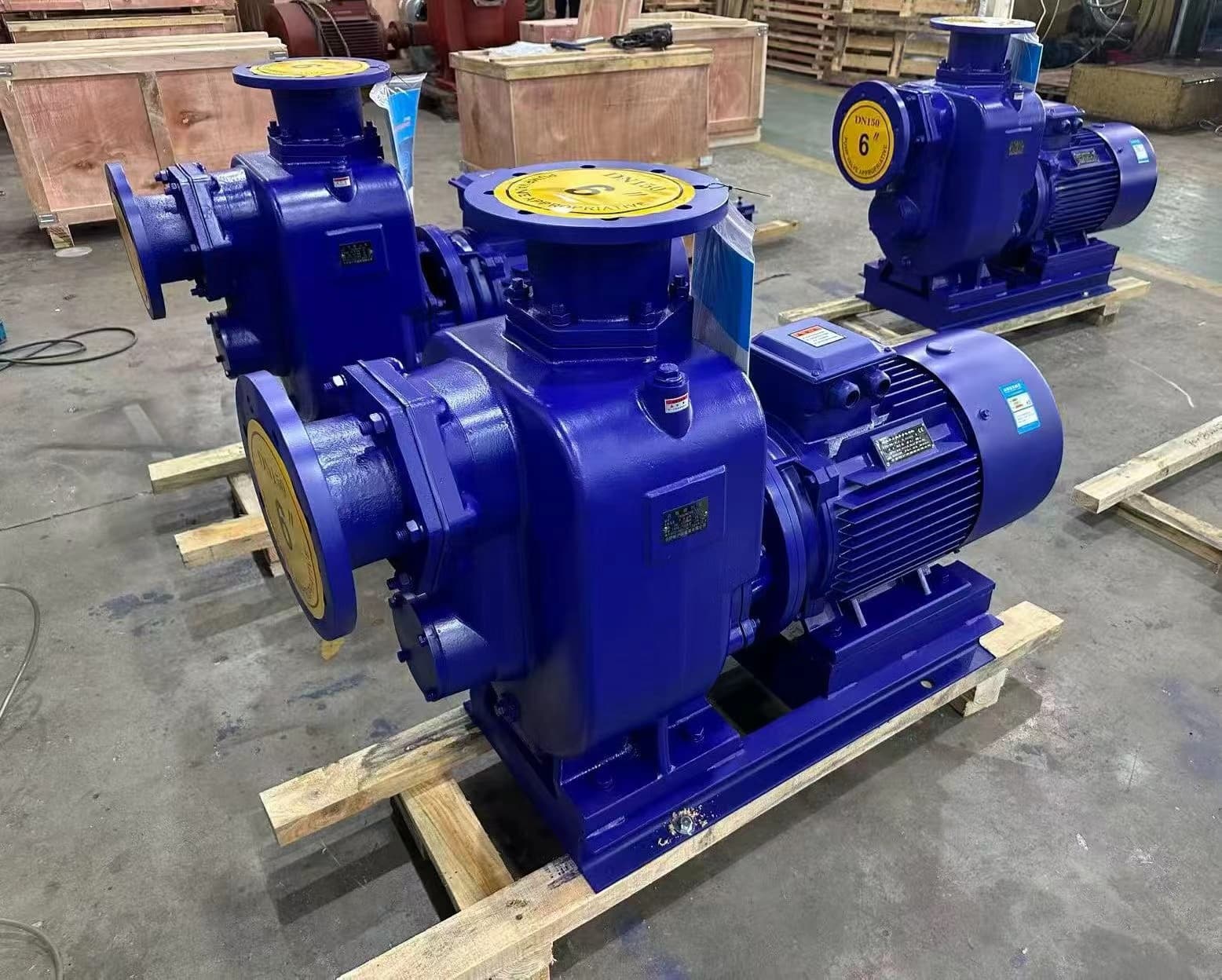
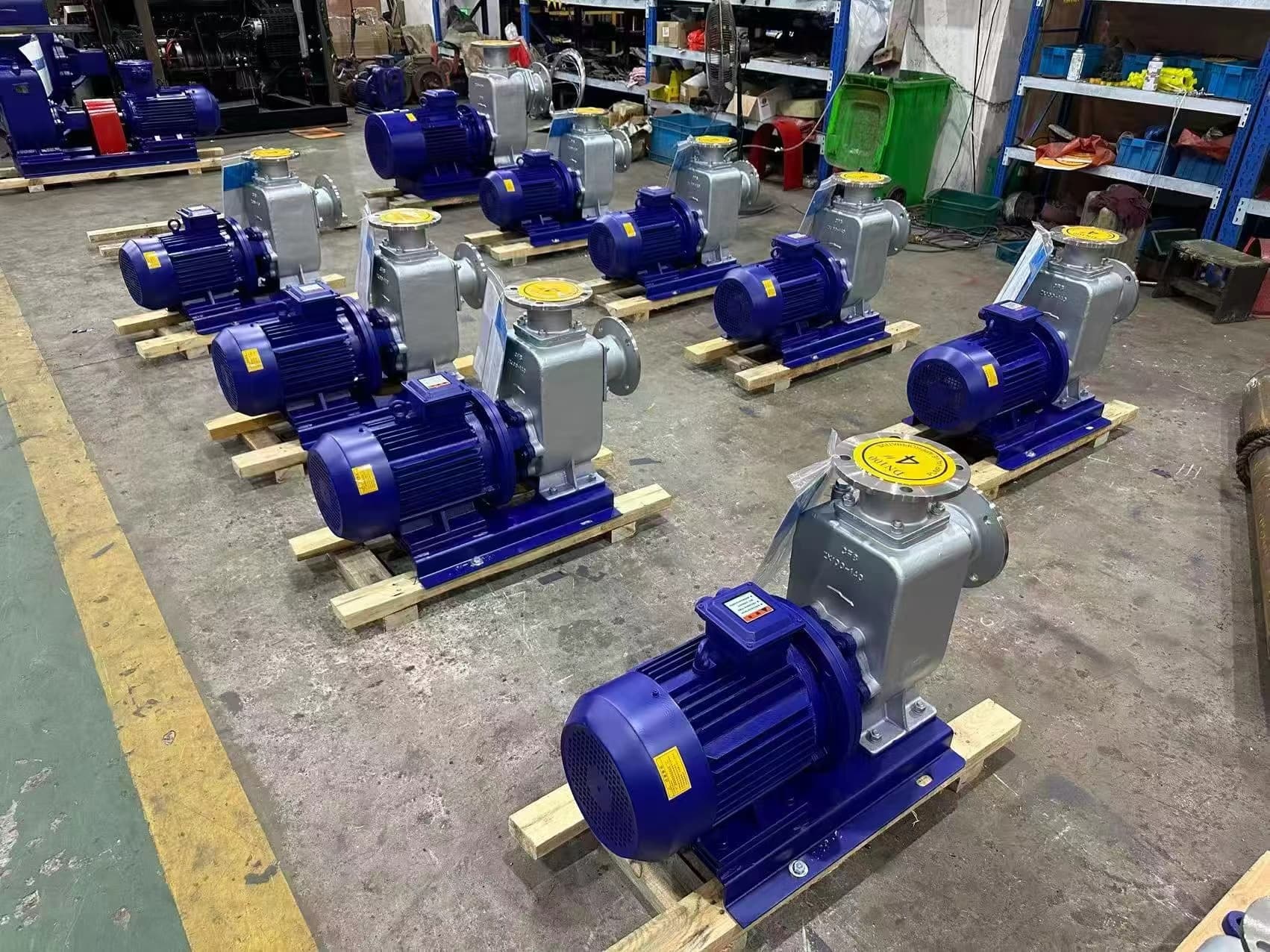 ZWL Direct-Coupled Self-Priming Sewage Pump