If you’re specifying a pump for dirty media, vague promises don’t help — you need to know what it can actually pass. Here are the real solids-handling figures for the ZWL direct-coupled self-priming sewage pump, and the limits to respect.
The rule of thumb
The ZWL’s passable sizes scale with the port diameter:
Solids: up to about 60% of the port diameter.
Fibre length: up to about 5 times the port diameter.
Put in numbers, that means:
Port size
Max solid (~60%)
Max fibre (~5×)
DN50
~30 mm
~250 mm
DN80
~48 mm
~400 mm
DN100
~60 mm
~500 mm
DN150
~90 mm
~750 mm
DN200
~120 mm
~1000 mm
DN300
~180 mm
~1500 mm
So a bigger port doesn’t just move more water — it also passes bigger solids and longer fibre. That’s often the deciding factor: if your media has large or stringy junk, you may size up the port for solids-passing reasons, not just flow.
The limits to respect
Non-clog isn’t limitless. Keep total suspended solids under about 15% of the medium’s weight, keep medium temperature within ≤80°C (special builds to ~200°C), and stay within the passable sizes above. Within those bounds, the ZWL runs clean; push past them and any pump will struggle.

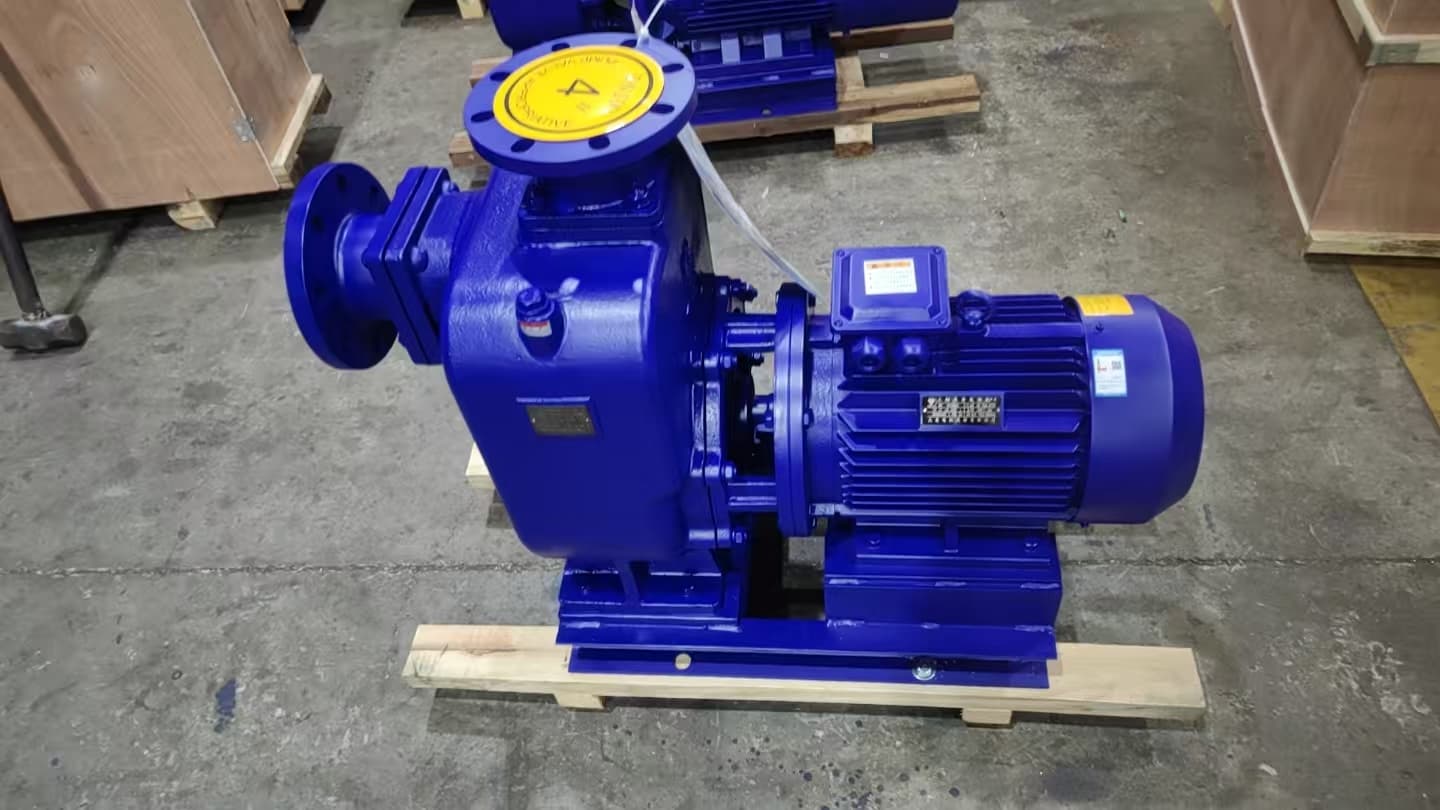
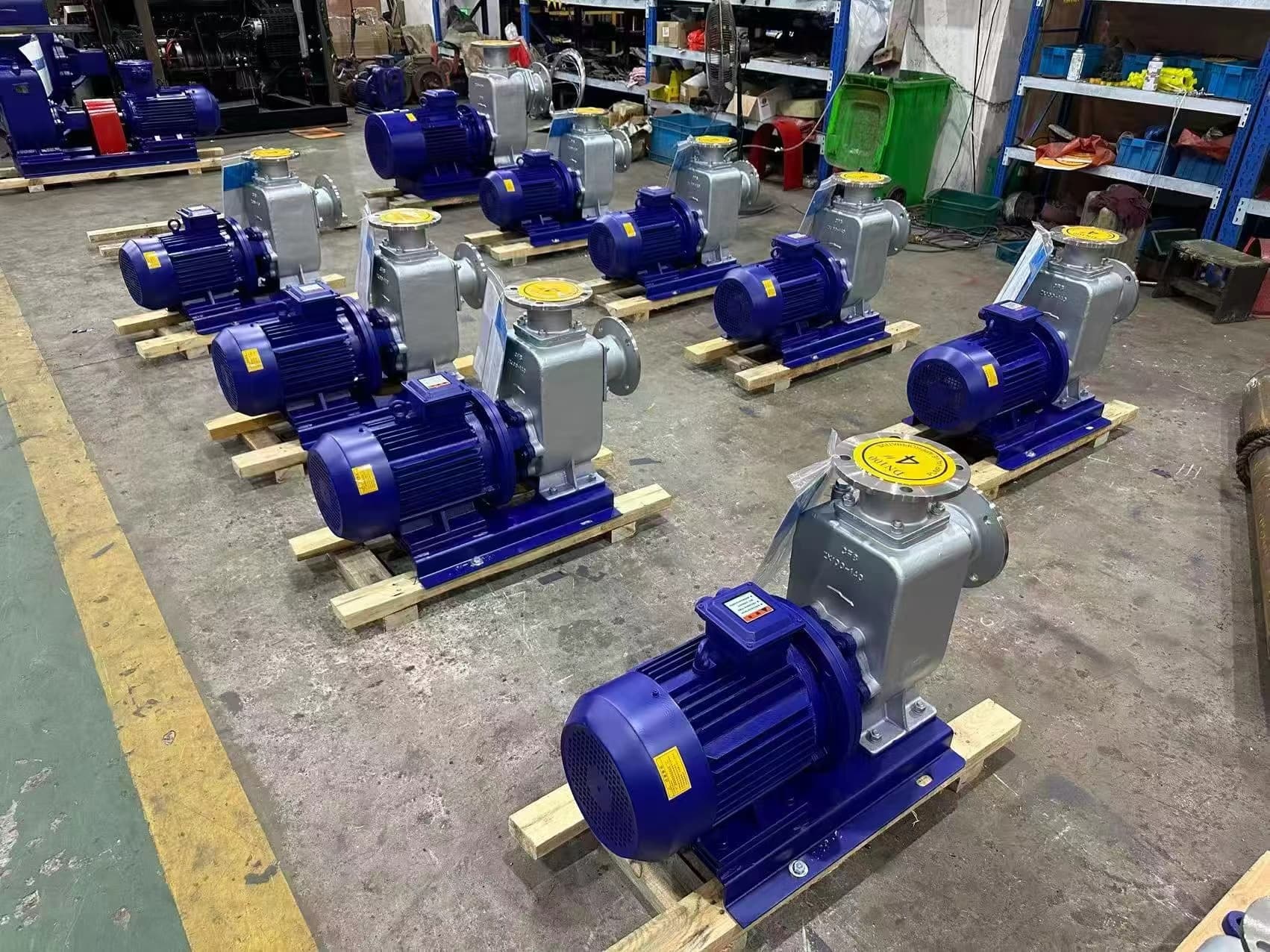 ZWL Direct-Coupled Self-Priming Sewage Pump