“Non-clog” gets stamped on a lot of pumps, but it’s worth knowing what it actually means on the ZWL direct-coupled self-priming sewage pump — because the numbers are specific, and they’re what decide whether your pump keeps running or chokes.
The two numbers that matter
The ZWL is rated to pass:
- Solids up to about 60% of the port diameter. On a DN100 pump that’s roughly 60 mm; on a DN300, about 180 mm. That’s real, chunky solids — not just fine grit.
- Fibre up to about five times the port diameter. Long, stringy material is what strangles most pumps, so this figure is the important one for sewage, pulp, textile and farm waste.
Those come straight from the pump’s design limits, and they’re why it copes with media that would jam an ordinary pump.
How it does it
Two things make it work. First, the flow passage is wide and open — no tight gaps for solids to wedge into. Second, the impeller and volute are shaped to let stringy material sweep through rather than wind up on a vane. Combined with the axial-reflux self-priming action, you get a pump that both primes itself and swallows the junk.
Know the limits
Non-clog isn’t unlimited. Keep total suspended solids under about 15% of the medium’s weight, and don’t exceed the passable solid and fibre sizes above. Push past those and any pump will struggle. Tell us what’s in your liquid and we’ll confirm the ZWL size that passes it comfortably.
Solids-handling range
- Passable solids: up to ~60% of port diameter
- Passable fibre length: up to ~5× port diameter
- Solids load: ≤15% of medium weight
- Port size: DN25–DN300
- Material: cast iron or stainless steel

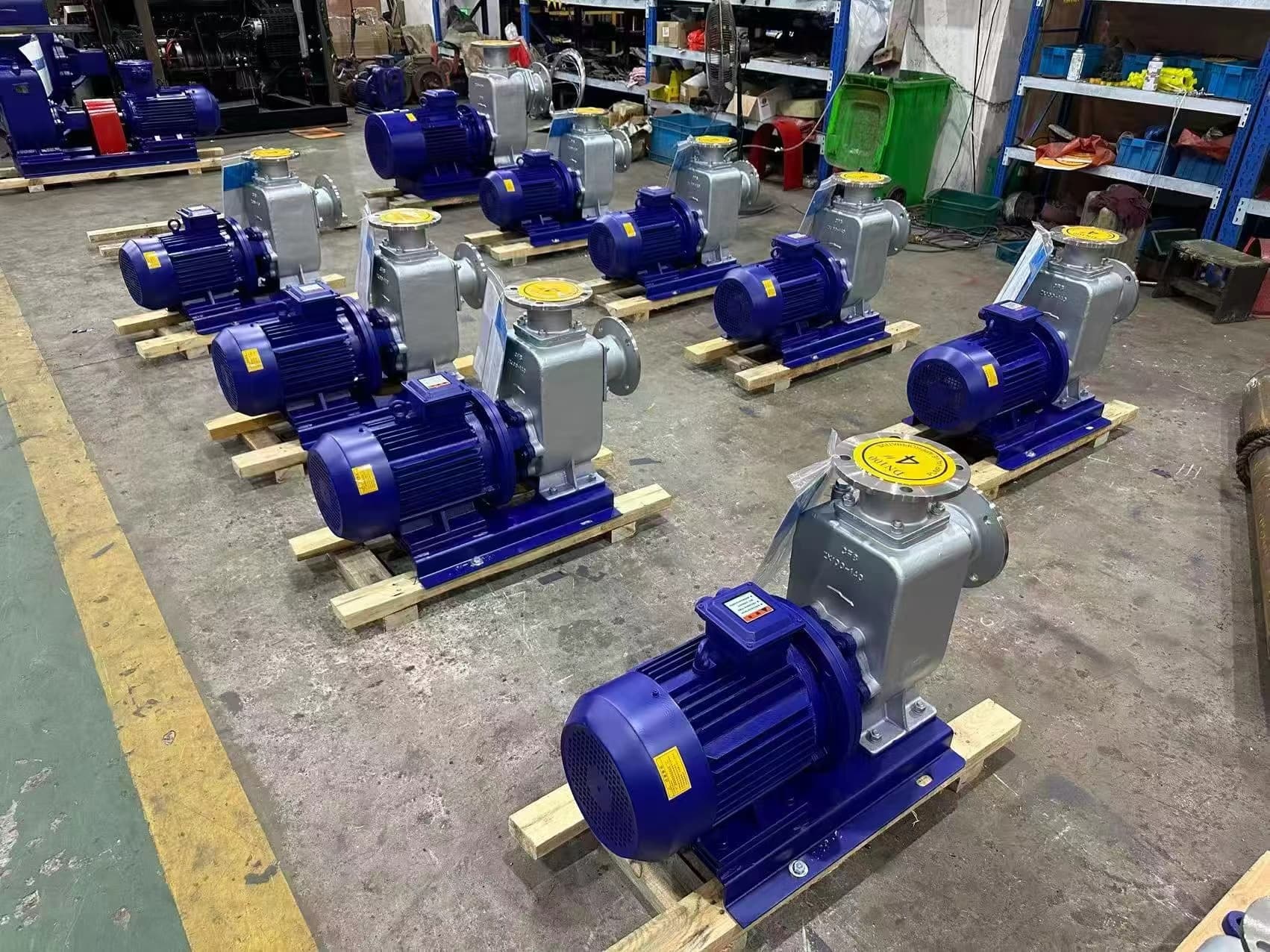 ZWL Direct-Coupled Self-Priming Sewage Pump