The letter that sets this pump apart is the “L” — it stands for direct-coupled (close-coupled). On a standard ZW self-priming pump, the pump has its own shaft and bearings and connects to the motor through an intermediate coupling and bracket. On the ZWL direct-coupled self-priming sewage pump, the impeller mounts straight onto the motor shaft. No coupling, no separate bearing assembly in the middle. That one change pays off in several practical ways.
Roughly 30% less footprint
By deleting the coupling and bracket, the whole unit gets shorter and more compact — the manufacturer figures around 30% less floor space than an ordinary self-priming pump of the same duty. In a crowded pump room, a tight plant corner, or on a mobile skid, that space is worth real money.
Simpler to install, less to maintain
- No coupling alignment. A misaligned coupling is a classic cause of vibration and early bearing failure. With the impeller on the motor shaft, there’s no coupling to align in the first place — one whole setup step disappears.
- Fewer wear parts. No coupling and no intermediate bearing assembly means fewer components to inspect and replace.
- Lower failure rate, longer life. Fewer moving parts in the drive line simply means fewer things to go wrong.
The trade-off versus a standard ZW is that the pump and motor are more integrated, so you service them as a closer unit. For most buyers who want the simplest, most compact install, that’s a win, not a cost.
Range & footprint
- Footprint: ~30% smaller than an ordinary self-priming pump
- Flow rate: 8–800 m³/h
- Head: 10–80 m
- Port size: DN25–DN300
- Material: cast iron or stainless steel

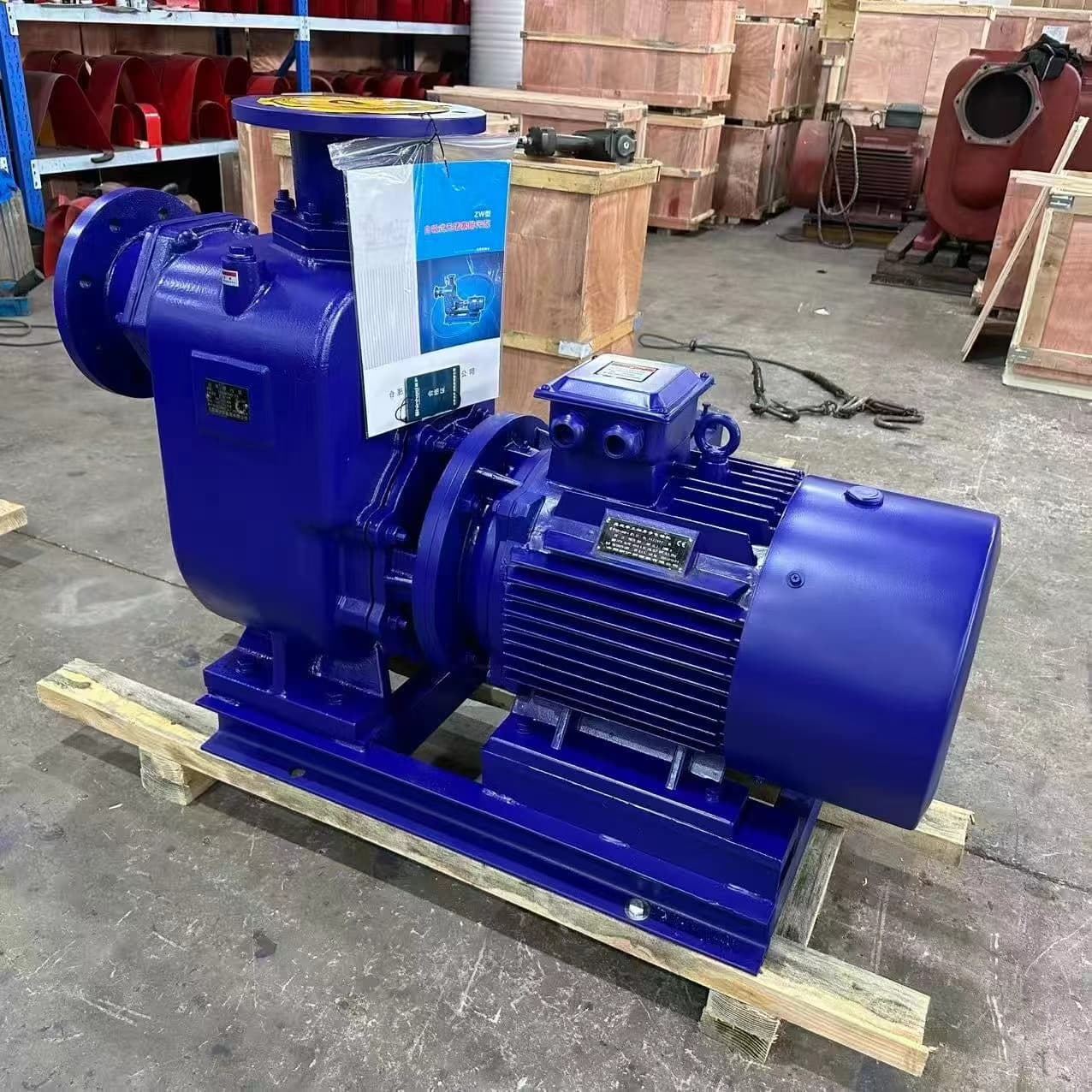
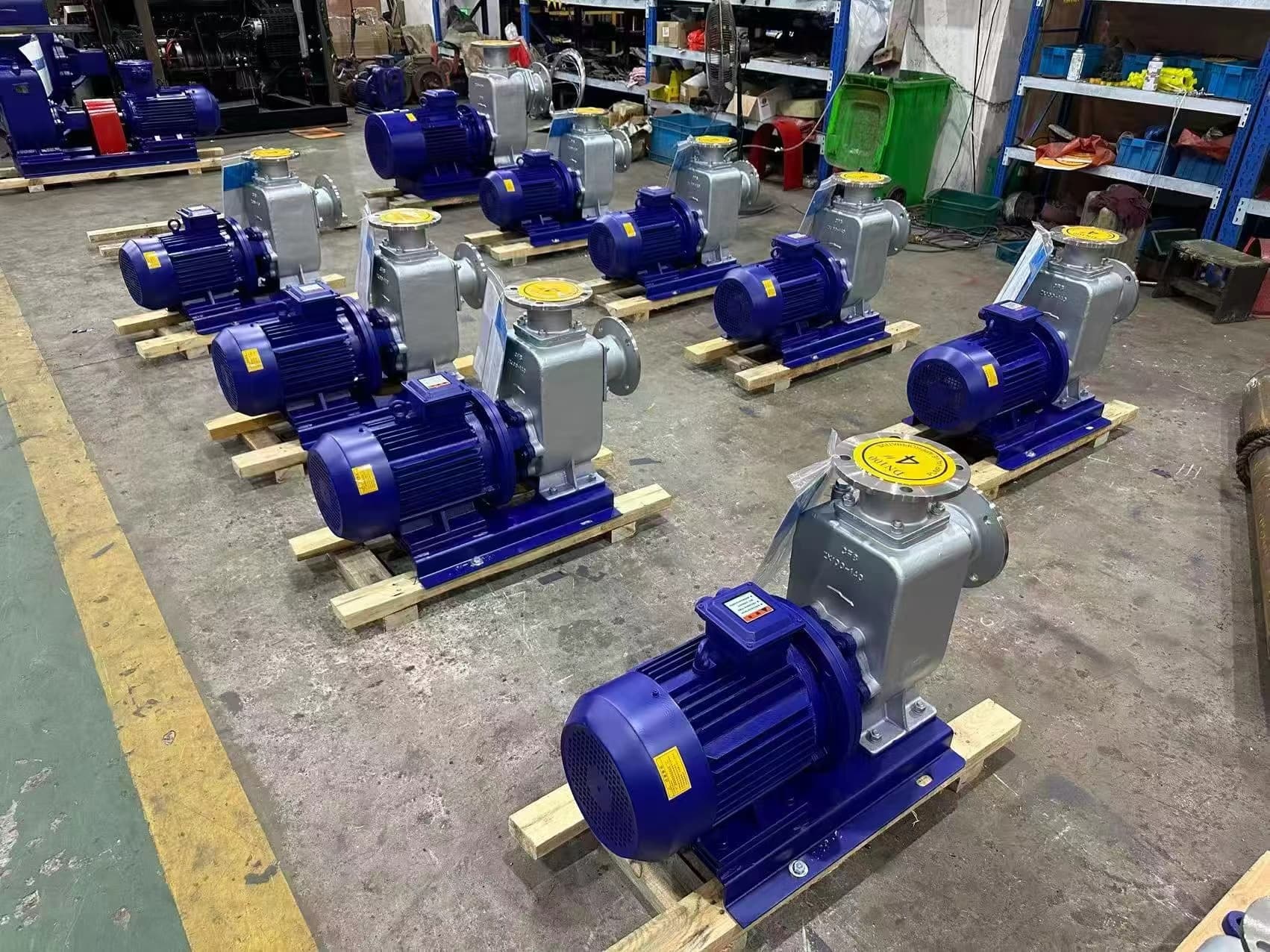 ZWL Direct-Coupled Self-Priming Sewage Pump