“Self-priming” sounds like magic if you’ve never seen inside one. It isn’t — it’s a neat bit of fluid mechanics. Here’s how the ZWL direct-coupled self-priming sewage pump actually works, step by step.
The parts that do the work
Inside the pump you’ve got the impeller sitting in its own impeller chamber, a pressure (discharge) chamber next to it, and a gas-liquid separation pipe with a grid. There’s also a water-filling valve on top, a check-valve flap at the inlet, and a drain plug at the bottom. The impeller mounts directly on the motor shaft — that’s the “L” (direct-coupled) part.
The priming sequence
- At rest, a charge of liquid stays inside the pump body (you add it once through the filling valve on first start-up).
- On start-up, the impeller spins and throws that stored liquid outward, dragging air from the suction line along with it.
- The air-and-liquid mix hits the gas-liquid separation chamber. The liquid drains back through the grid into the working chamber; the air escapes out the discharge.
- Repeating this thousands of times a second, the pump steadily evacuates air from the suction line, creating a vacuum at the inlet — which pulls the media up. Once solid liquid arrives, the pump is primed and runs like a normal centrifugal pump: the impeller creates suction at the inlet and head at the outlet.
Why it also passes solids
The impeller and flow passages are shaped wide and open, so the same pump that primes itself also passes solids up to about 60% of the port diameter and fibre up to five times it — that’s the “non-clog” half of its name.
ZWL series at a glance
- Flow rate: 8–800 m³/h
- Head: 10–80 m
- Self-priming height: 4.5–5.5 m
- Passable solids: up to ~60% of port diameter
- Material: cast iron or stainless steel

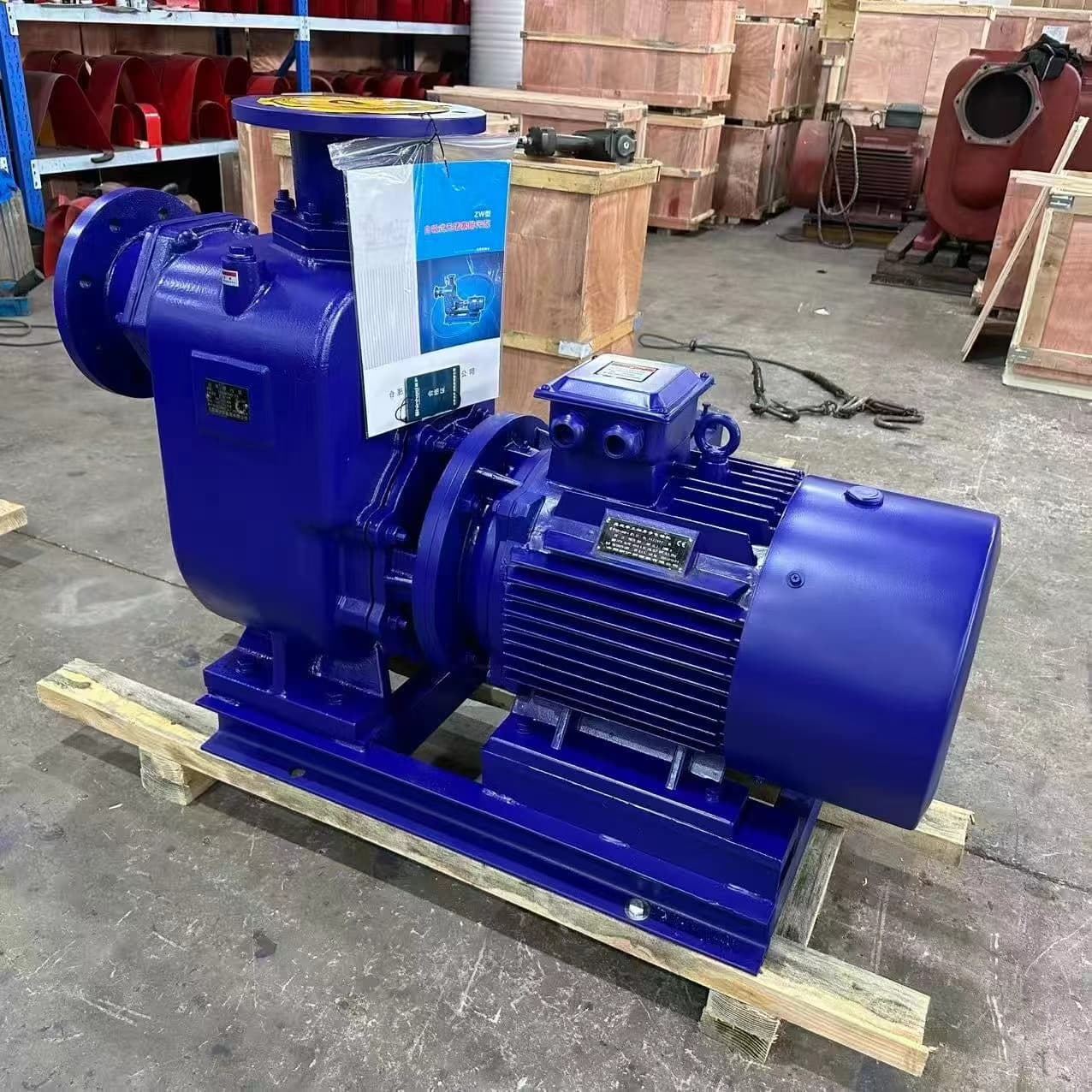
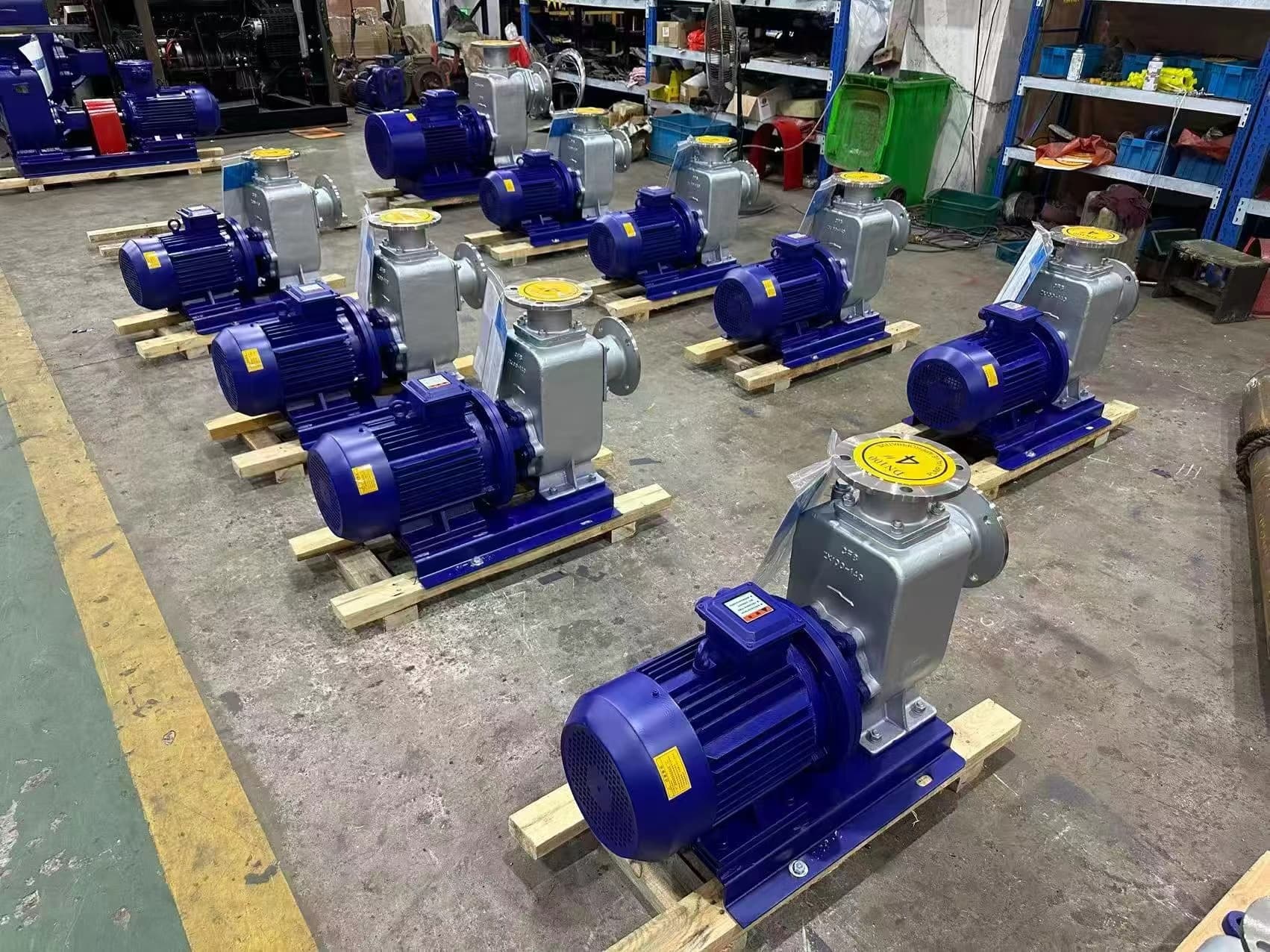 ZWL Direct-Coupled Self-Priming Sewage Pump