
WQ and QW Submersible Sewage Pump Differences
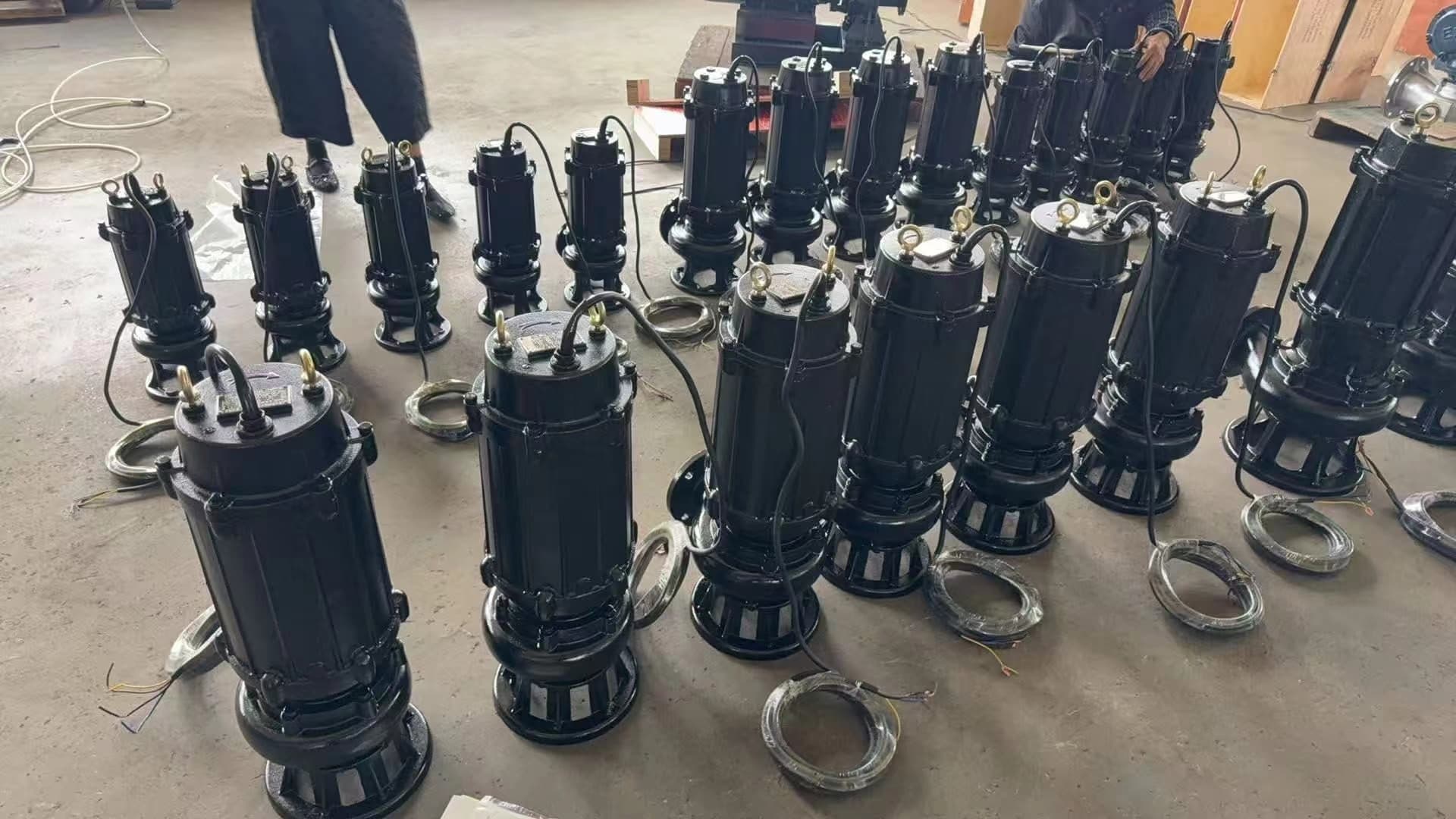
Buyers searching for a submersible sewage pump often see the letters WQ and QW in Chinese pump models. These designations can look like two completely different pump technologies, but the supplied technical material explains that the hydraulic structures are broadly similar.
What WQ and QW Usually Mean
In the referenced terminology, WQ is commonly associated with a fixed submersible sewage pump installation, while QW is associated with a mobile installation. Overseas buyers may simply refer to both as submersible sewage pumps and focus on the actual hydraulic and mechanical specification.
The Letter Is Not the Whole Spec
The important point is that the model code should not replace a technical review. The pump needs to be selected by flow, head, discharge diameter, motor power, liquid characteristics and installation arrangement. A model number such as 40QW(WQ)15-30-2.2 indicates a 40 mm outlet, 15 m³/h flow, 30 m head and 2.2 kW motor in the example described by the supplied documentation.
Fixed and Mobile Installation
Both fixed and mobile installations can be useful. A fixed automatic coupling system uses guide rails and is convenient for permanent sewage stations. A mobile free-installation arrangement can use a support and flexible hose, making it practical for temporary pumping, emergency drainage and maintenance.
Hydraulic Design
The hydraulic side remains focused on non-clogging wastewater service. Single-channel or twin-channel impellers provide an open passage intended to move solids and long fibers while reducing wrapping and blockage. The source material also describes balanced impellers and matched volute passages for stable operation.
Protection Features
Protection features can be added regardless of the installation approach. Leakage detection in the oil chamber, thermal protection in the motor winding and an automatic control cabinet can help protect the pump. Float switches can provide automatic level-based operation.
Electrical Supply
For export orders, electrical requirements should be stated clearly. A 415 V, 50 Hz motor configuration can be customized when required. The selected motor power and control system still need to match the pump duty and local electrical conditions.
Ask about the duty point before asking which letter is on the nameplate. It tells you more.
Products in This Series
Submersible Sewage Pumps200QW250-18-22 Sewage Pump: Factory Test Results
200QW250-18-22 submersible sewage pump: 250 m³/h at 18 m, 22 kW, DN200. Factory test results: 19.19 m at 250 m³/h and 68.6% pump efficiency.
 Submersible Sewage Pumps
200QW300-15-22 Submersible Sewage Pump, 300 m³/h 15 m
200QW300-15-22 submersible sewage pump: 300 m³/h at 15 m, 22 kW 4-pole, DN200 outlet. Installation dimensions, flange data and drawing download.
Submersible Sewage Pumps150QW180-15-15 Sewage Pump: Curve and Dimensions
150QW180-15-15 submersible sewage pump: 180 m³/h at 15 m, 15 kW 4-pole, 1450 r/min, DN150. Performance curve explained and installation dimensions.
Need a pump for your application?
Our engineers respond to technical inquiries within 24 hours.
Get a Quote