
Submersible Sewage Pump Running but No Water? 8 Causes
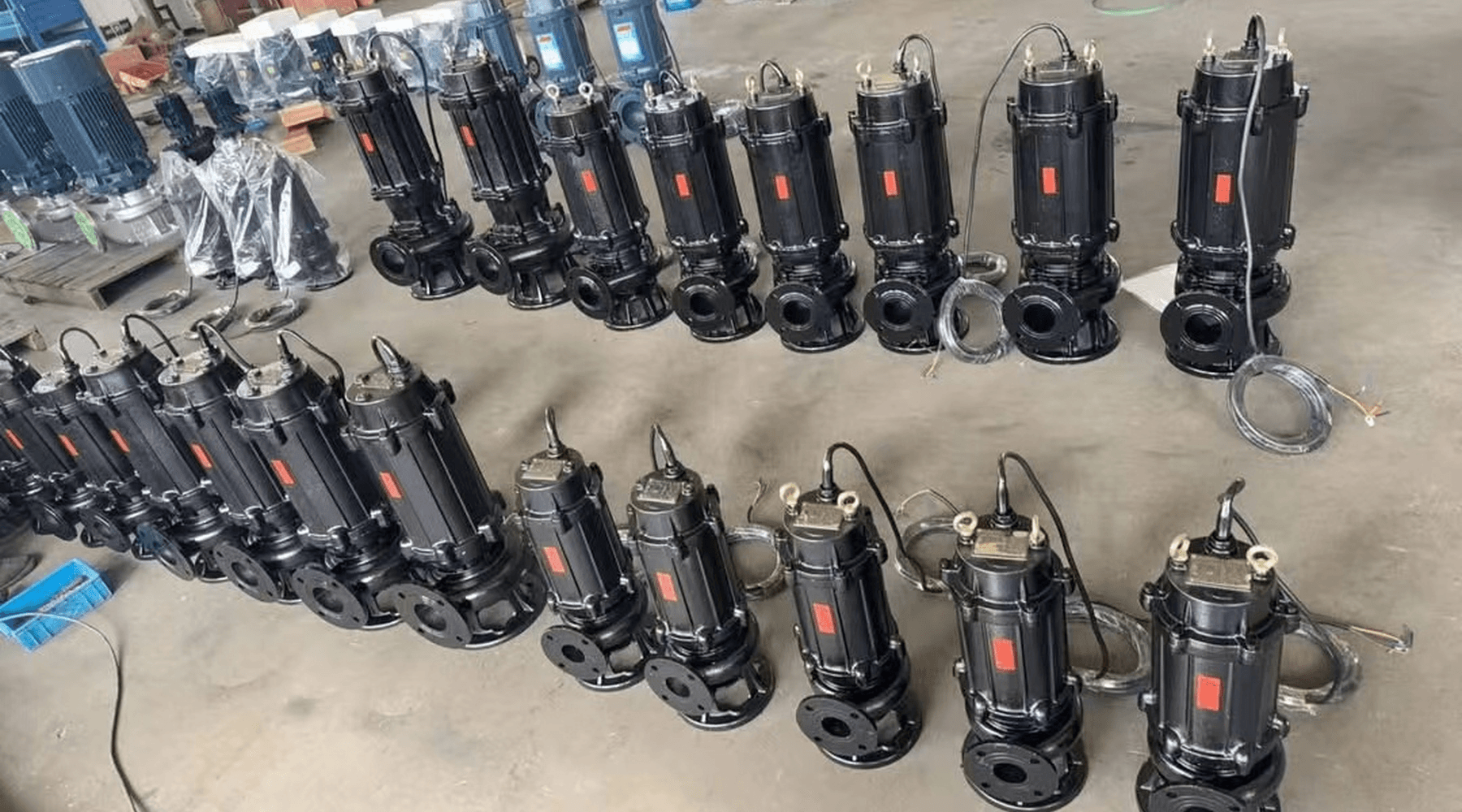
Before you check anything, switch off and isolate the power, and never lift the pump by its power cable. Use a rope or chain on the lifting point. Then work through the causes below, roughly from the most common to the least.
1. Wrong direction of rotation
On a three-phase pump, swapping any two supply phases reverses the motor. A reversed pump still turns and still moves some water, which is why this fault is easy to miss. Check the rotation arrow on the pump, or compare the flow before and after swapping two phases. This is the first thing to check after any new installation or electrical work.
2. Air trapped in the pump
If the pump was lowered into the pit with the check valve closed above it, air can stay trapped in the volute. The impeller spins in air and nothing comes out. Venting the discharge pipe, or drilling a small air relief hole in the discharge pipe below the check valve, usually solves it.
3. Blocked inlet or strainer
Rags, plastic and sludge can pile up around the inlet. Lift the pump and clean it. If it keeps happening, the liquid may need a cutter pump instead of a standard non-clog pump.
4. Clogged or worn impeller
Fibres wrapped around the impeller, or an impeller worn by sand, reduce both flow and head. Inspect it, clean it and replace it if the vanes are worn.
5. The system head is higher than the pump can deliver
A closed or half-open valve, a blocked pipe, or a discharge point higher than planned can push the pump to its shut-off head, where it runs but delivers almost nothing. Compare the real static height and pipe length with the pump curve. Our head calculator works out the system head in a few minutes.
6. Liquid level too low
If the level falls below the pump inlet, the pump draws air. Check the stop level of the float switch and make sure the pump is fully submerged while it runs. Running a pump dry for long periods also overheats the motor.
7. Low voltage or a missing phase
A weak supply makes the motor slow down and the flow drop. Losing one phase on a three-phase pump makes it hum and trip. Measure the voltage on all phases at the pump, with the pump running.
8. Leaking or broken discharge pipe
A cracked pipe or a failed joint in the pit sends the water straight back down. Look for turbulence in the pit while the pump runs.
If none of these explains the problem, send us the pump model, the voltage, a photo of the nameplate and a short video of the pump running, and we will help you find the cause.
Need a pump for your application?
Our engineers respond to technical inquiries within 24 hours.
Get a Quote