
Single-Phase or Three-Phase Sewage Pump? What to Know
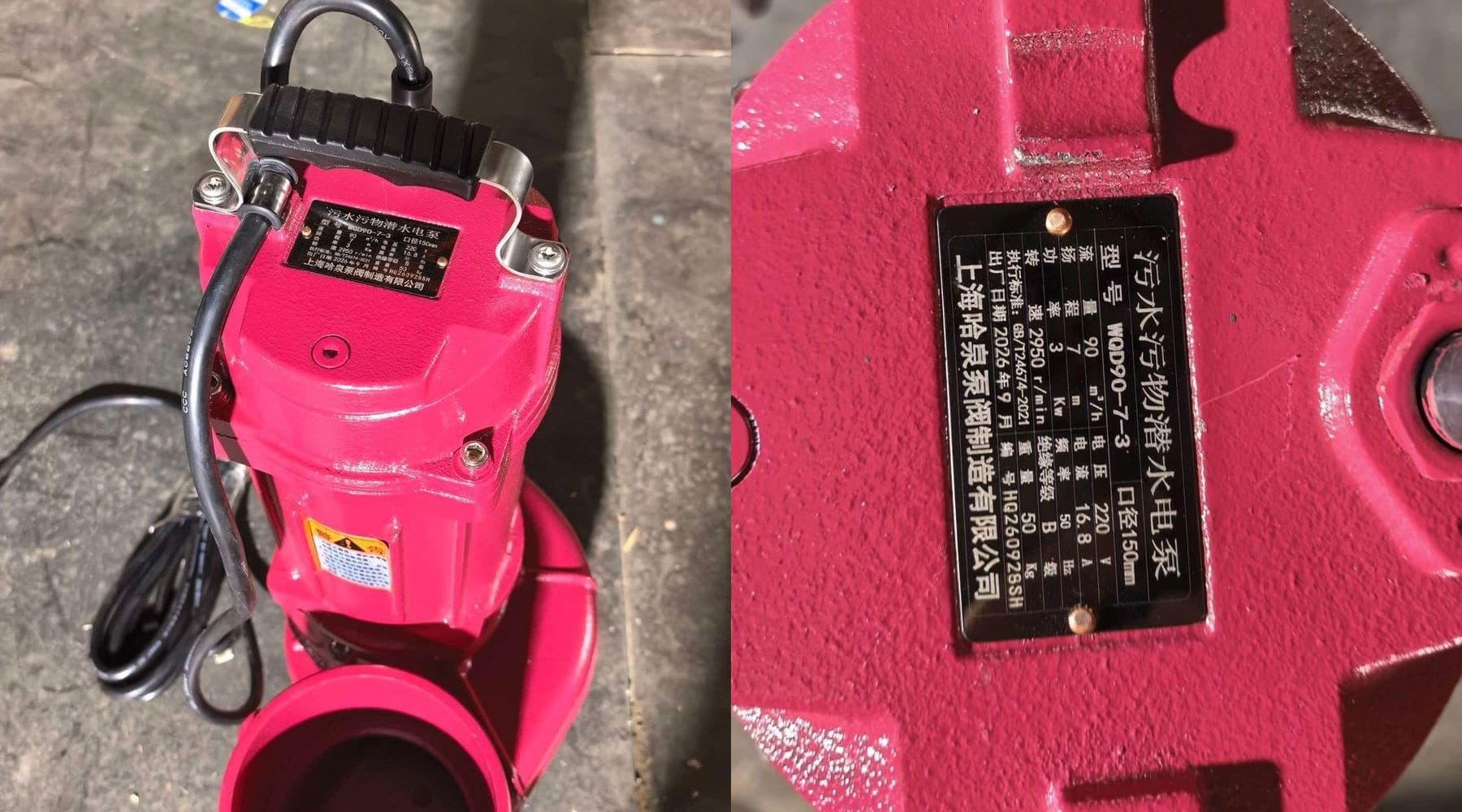
The power supply on site often decides the pump before the hydraulics do. A house, a small shop or a remote pit may only have single-phase 220 to 240 V, while factories, treatment plants and most commercial buildings have three-phase 380 to 415 V. Here is what changes between the two.
Current is the big difference
For the same motor power, a single-phase motor draws far more current. The single-phase 3 kW pump we built for a customer in Dubai draws 16.8 A at 220 V. A three-phase 3 kW motor on 380 V draws only around 6 to 7 A. More current means a thicker supply cable, a larger circuit breaker and more voltage drop on long cable runs. Always size the cable and breaker for the actual motor current, not just the kW rating.
Why most larger sewage pumps are three-phase
- Three-phase motors start more easily and do not need a starting capacitor.
- They run cooler and smoother, which matters for pumps that cycle on and off many times a day.
- The lower current keeps cable costs down, especially when the control panel is far from the pit.
That is why our standard sewage pumps above a few kilowatts are three-phase, and why a single-phase pump with a large flow is normally a custom build.
When single-phase is the right choice
If the site only has single-phase power and the duty is modest, a single-phase pump is the simplest solution. It also suits portable drainage pumps that are moved between sites. For larger duties, it can still work if the head is low. In the Dubai project the customer needed 90 m³/h at only 7 m, so a 3 kW single-phase motor was enough, but the pump had to be built to order.
Other options if you only have single-phase power
A variable frequency drive with single-phase input can run a small three-phase motor, and it also gives soft starting. For larger motors, ask the power company whether a three-phase connection is possible. It often pays for itself through cheaper pumps and cables.
Tell us your voltage, frequency and the number of phases when you ask for a quotation. 50 Hz and 60 Hz motors are different too, so please always state the frequency.
Need a pump for your application?
Our engineers respond to technical inquiries within 24 hours.
Get a Quote