
60 Hz and Special Voltage Sewage Pumps: What Changes
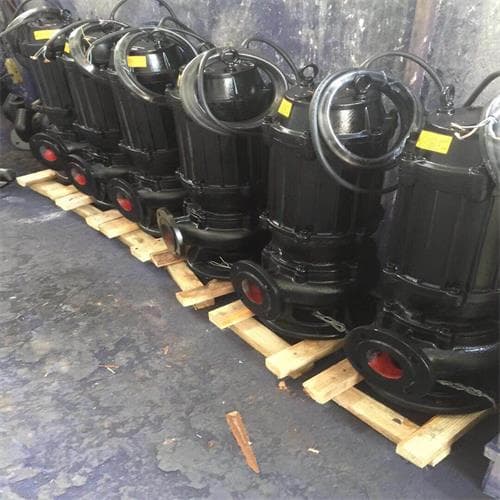
Two recent enquiries show why the supply frequency matters: a project in Brazil needing 380 V, 60 Hz pumps, and a ship conversion managed from Cyprus that needed 440 V, 60 Hz cutter pumps. Pumps like these are built to order, and the frequency changes more than most buyers expect.
What 60 Hz does to a pump
An induction motor runs about 20% faster on 60 Hz than on 50 Hz. A 2-pole motor goes from about 2900 to about 3500 r/min. The pump follows the affinity laws:
| Quantity | Changes with | Effect of 50 Hz to 60 Hz |
|---|---|---|
| Flow | Speed | About 20% more |
| Head | Speed squared | About 44% more |
| Power | Speed cubed | About 73% more |
That last line is the important one. A 50 Hz pump connected to a 60 Hz supply needs far more power than its motor can give, and it overloads. This is why a 60 Hz pump is not simply a 50 Hz pump with a different label. The impeller is trimmed or redesigned for the higher speed, and the motor is wound for the 60 Hz voltage.
Voltage matters too
Common supplies include 220 V and 380 V at 50 Hz, 380 V or 460 V at 60 Hz, and 440 V at 60 Hz on many ships. The motor winding must match the supply exactly. A motor running on too high a voltage overheats; on too low a voltage it draws more current and loses torque.
What to send us
- Voltage, frequency and number of phases.
- Flow and head at the duty point, measured or calculated for the 60 Hz system.
- The liquid and any solids or fibres.
- Whether you need performance curves at quotation stage. Because 60 Hz pumps are built to order, we can share 50 Hz curves for reference and confirm the 60 Hz performance after production.
Need a pump for your application?
Our engineers respond to technical inquiries within 24 hours.
Get a Quote