
What the (I) in a Pipeline Pump Model Means: Double the Flow
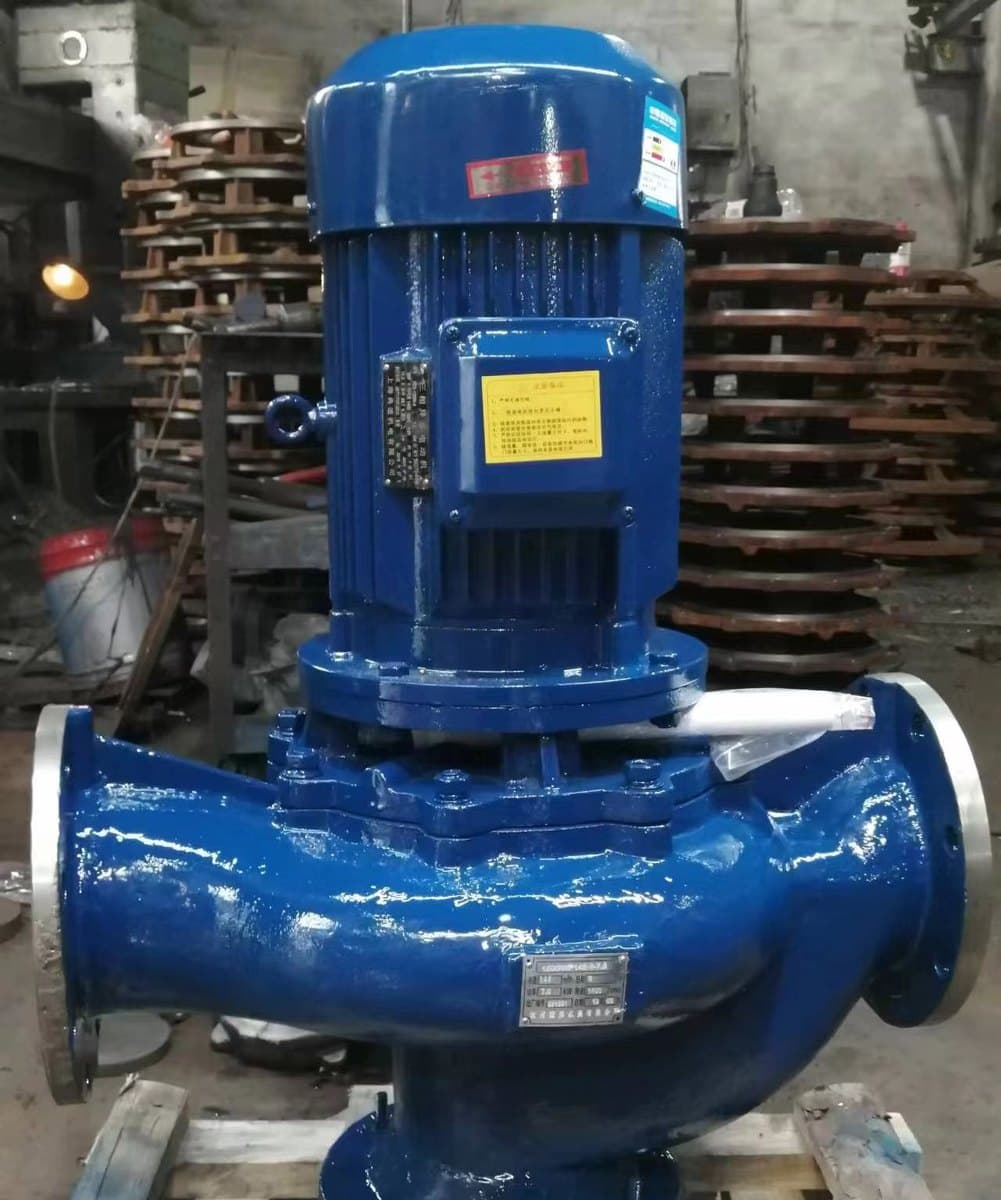
The (I) marks a higher-flow version of the same frame. It keeps the port size and the nominal impeller diameter, and roughly doubles the rated flow at the same head.
| Model | Rated flow (m³/h) | Head (m) | Motor (kW) | Efficiency (%) |
|---|---|---|---|---|
| 50-160 | 12.5 | 32 | 3 | 52 |
| 50-160(I) | 25 | 32 | 4 | 63 |
| 80-200 | 50 | 50 | 15 | 67 |
| 80-200(I) | 100 | 50 | 22 | 74 |
When to choose (I)
- The duty needs more flow than the standard frame gives but you want to keep the pipe size
- Efficiency matters: the (I) builds in our table are generally more efficient at their rated point
When not to
If the flow you need is close to the standard build’s rating, the (I) version would run far to the left of its best point. Match the rated flow to your duty, not just the port size.
Products in This Series
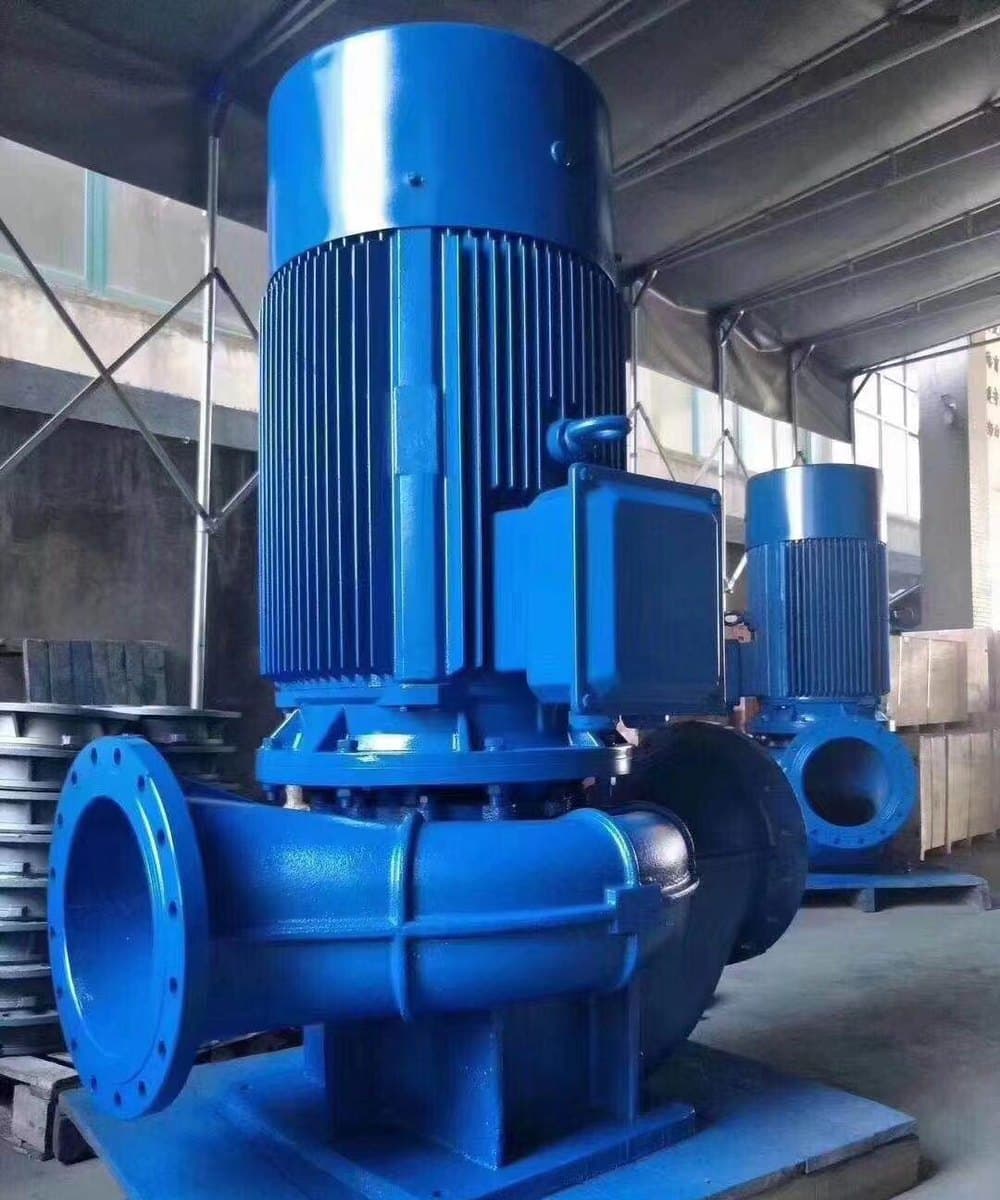 Pipeline Centrifugal Pumps & CDL Multistage Pumps
Pipeline Pumps for HVAC Chilled and Condenser Water Circulation
Vertical inline pumps for chilled water and condenser water loops in HVAC systems: what sets the flow and head, and why closed-loop pressure matters.
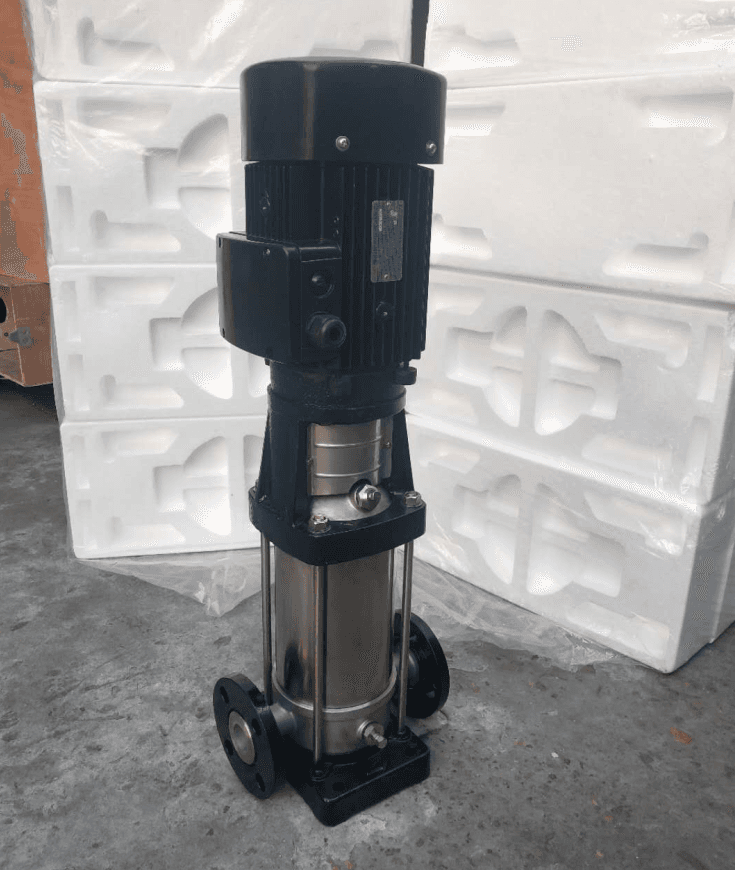 Pipeline Centrifugal Pumps & CDL Multistage Pumps
60 Hz and Special Voltage Pipeline Pumps and CDL Multistage Pumps
Pipeline and multistage pumps for 60 Hz and 380, 440 or 460 V supplies. Why a 50 Hz pump overloads on 60 Hz and what to send us.
Pipeline Centrifugal Pumps & CDL Multistage PumpsA, B and C Trimmed Impellers: Matching a Pipeline Pump to the Duty
The A, B and C at the end of a pipeline pump model mark trimmed impellers. How trimming lowers head and power, with the 40-250(I) family as an example.
Need a pump for your application?
Our engineers respond to technical inquiries within 24 hours.
Get a Quote