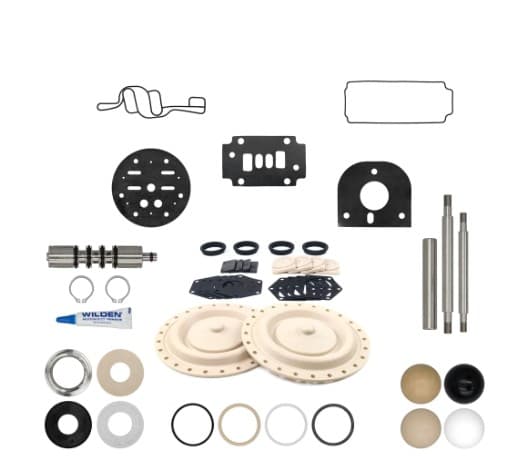
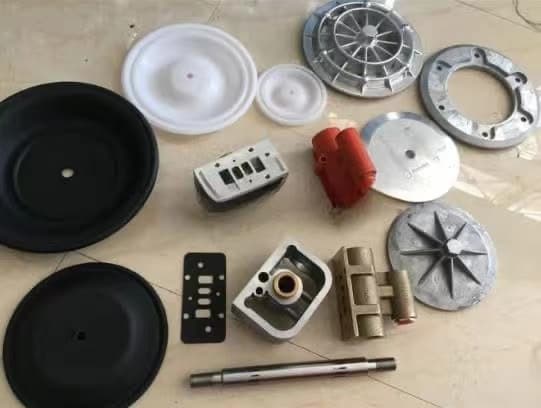
A pump that takes forever to prime, or pulses weakly and won’t hold its output, gets blamed on the diaphragms more often than it should. Look at the balls.
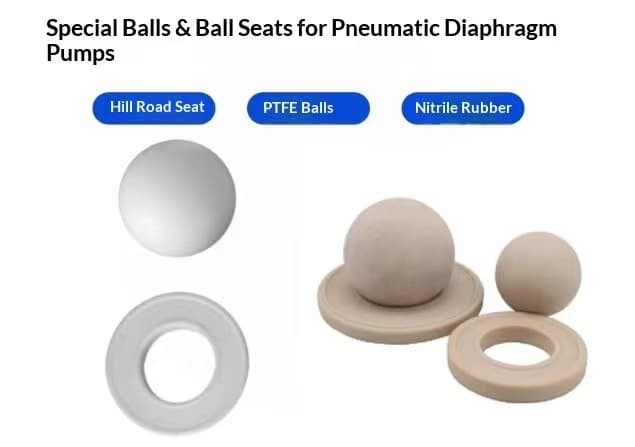
There are usually four of them in an air-operated diaphragm pump, two on the suction side and two on the discharge. Each one lifts to let liquid through and drops back to stop it running backwards, every stroke, all day. Flat spots, chips, a ball that’s no longer round, or one that’s swollen and soft (usually chemical attack) all mean it’s finished.
Pick the material for the fluid you’re actually pumping. PTFE, elastomers, polyurethane and stainless steel are the common options, and with slurry, harder isn’t always better. Check the ball material code on your parts list, change all four together, and look at the seats while everything is out. A new ball on a worn seat won’t seal.
The check balls we supply are original Wilden, for genuine Wilden T15 pumps. Ask about availability at sales@haquanpump.com.

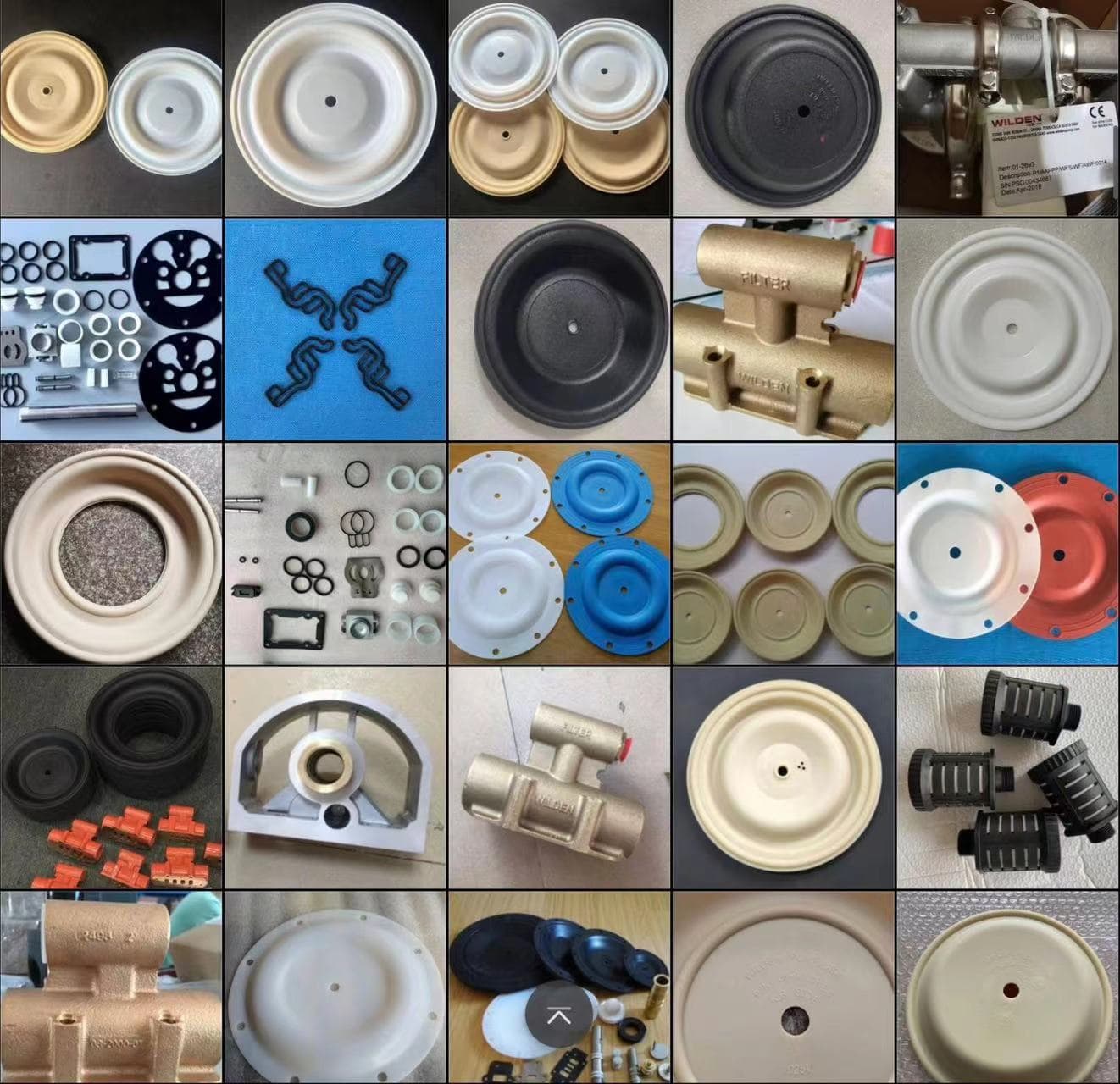 Genuine Wilden AODD Diaphragm Pumps & Spare Parts