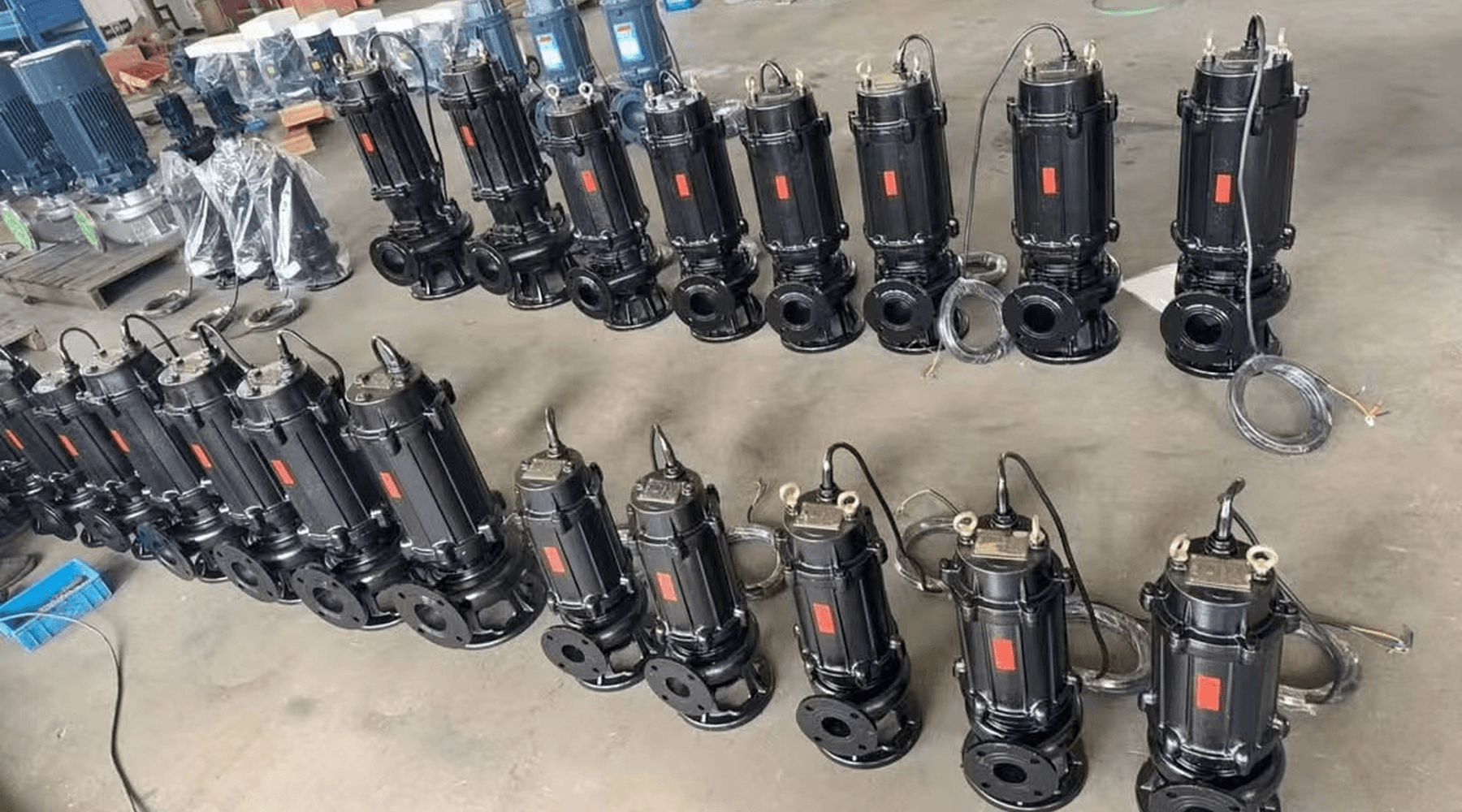
Look through the catalog of almost any Chinese submersible sewage pump manufacturer and a pattern shows up quickly: whether the model is labeled WQ or GWQ, the standard impeller is nearly always dual-channel. That’s not a coincidence, and it comes down to a few practical reasons.
A Near-Standard Design Across WQ and GWQ Models
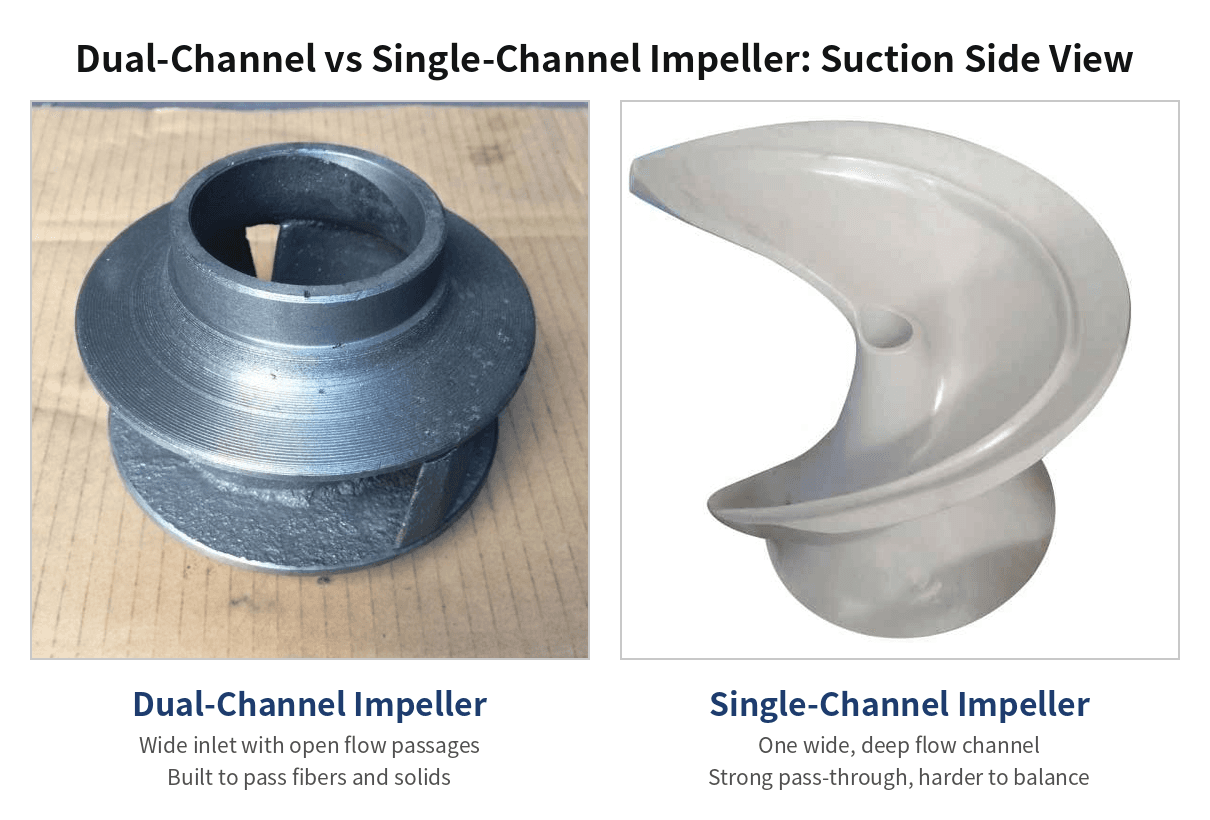
Dual-channel impellers have become close to a default configuration in this category. It’s the shape most manufacturers reach for first when quoting a general-purpose sewage pump, and single-channel versions are usually offered as an option rather than the baseline.
Smoother Running, Simpler Dynamic Balance
Because the two channels are symmetrical, the impeller is inherently easier to balance dynamically than a single-channel design. Lower vibration means less stress on bearings and mechanical seals over years of continuous duty, which matters for a pump that’s often installed in a wet well or lift station where daily inspection isn’t practical.
Clog Resistance That Reduces Maintenance Calls
Domestic and municipal sewage routinely carries hair, rags, plastic bags and fibrous material. The two wide channels give this debris room to pass through rather than wrapping around the impeller. For facility managers and treatment plant operators, fewer callouts for a blocked pump is a real, measurable saving.
Where the Efficiency Trade-Off Still Makes Sense
A single-channel impeller can be a little more efficient because its flow path is more direct. Dual-channel designs give up some of that efficiency for balance and symmetry. The gap is usually modest, and for sewage duty the running cost of a blocked or vibrating pump tends to outweigh a small difference in electrical efficiency — which is the practical reason dual-channel has become the mainstream choice domestically.
When a Single-Channel Impeller Is Still the Better Fit
For unusually demanding waste streams — livestock wastewater or slaughterhouse effluent with very large solids or long fibers, for example — the stronger pass-through of a single-channel impeller can still be the right call. For typical municipal and general industrial sewage, though, dual-channel is the configuration most buyers end up with, and it’s the current standard for a reason.

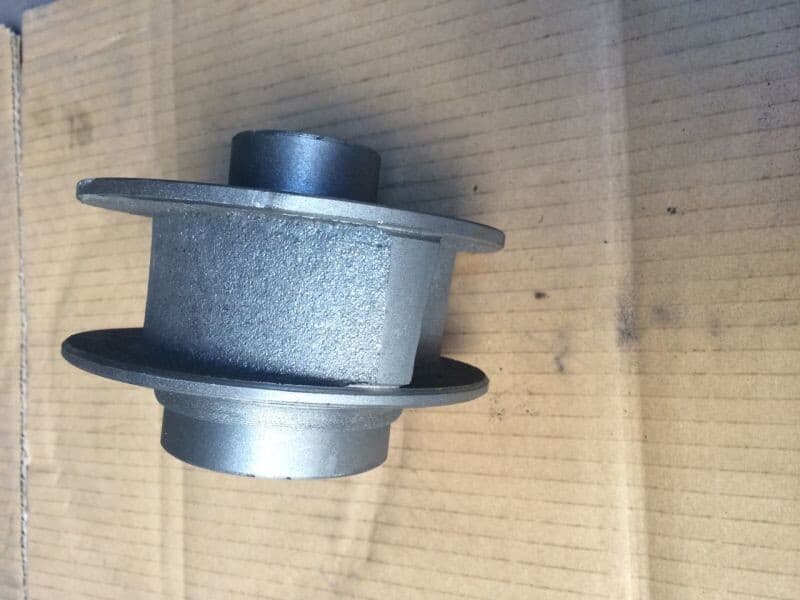 Submersible Sewage Pumps