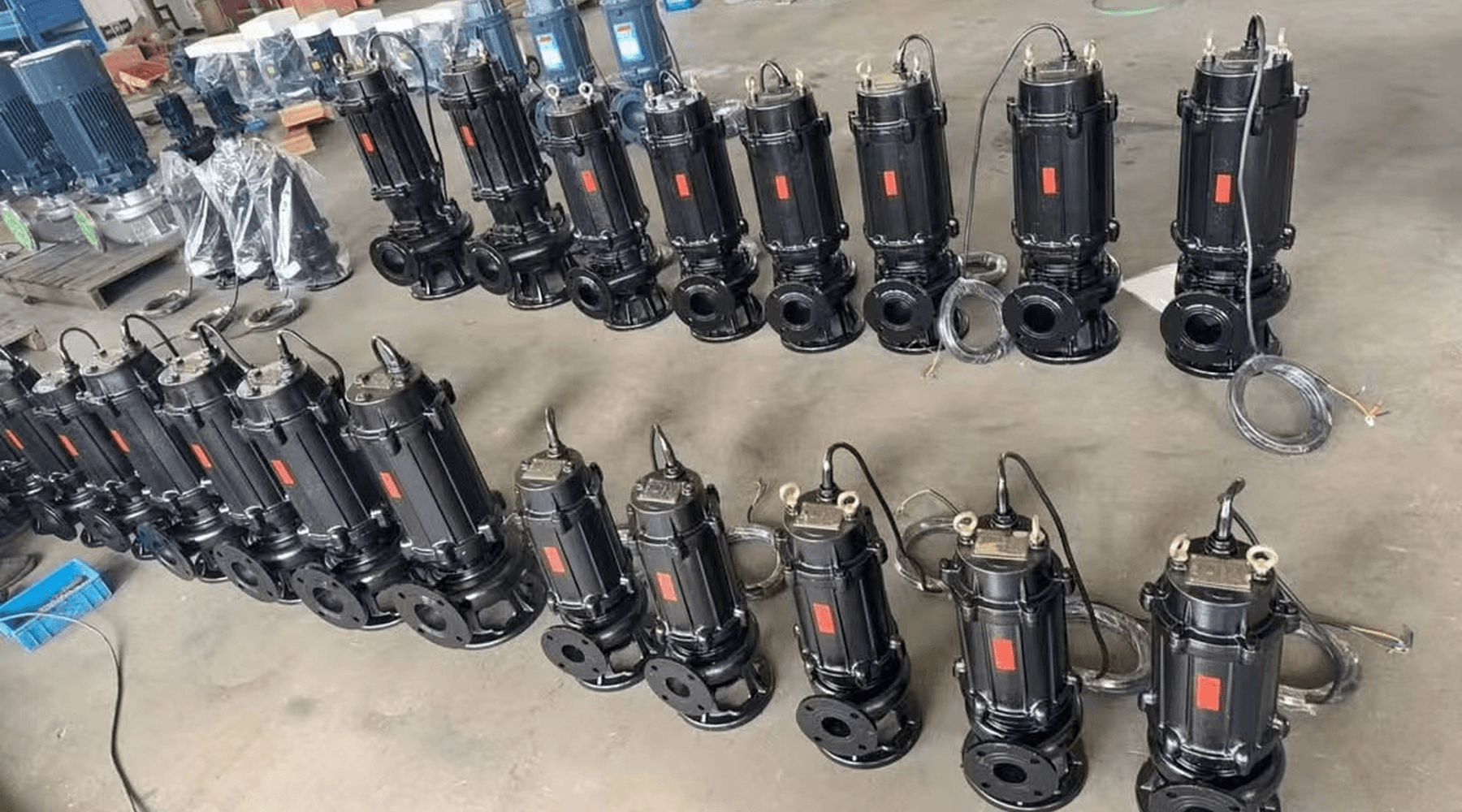
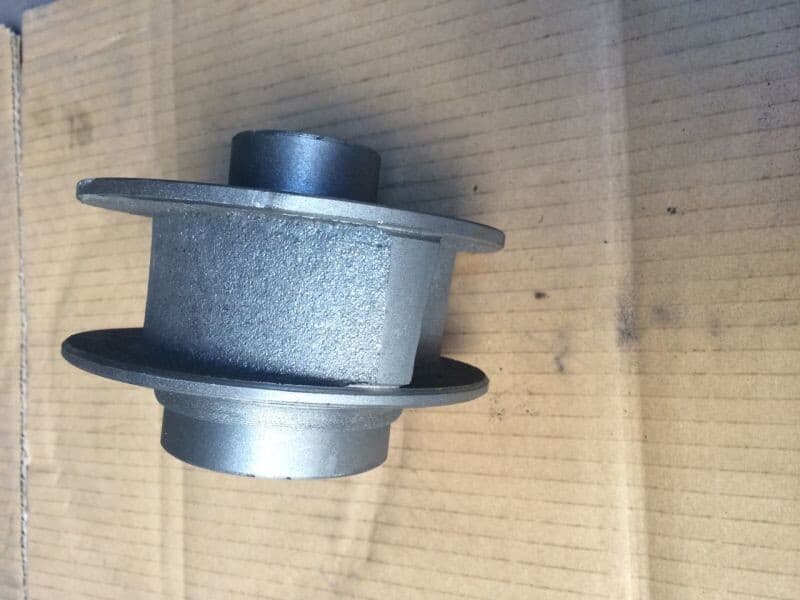
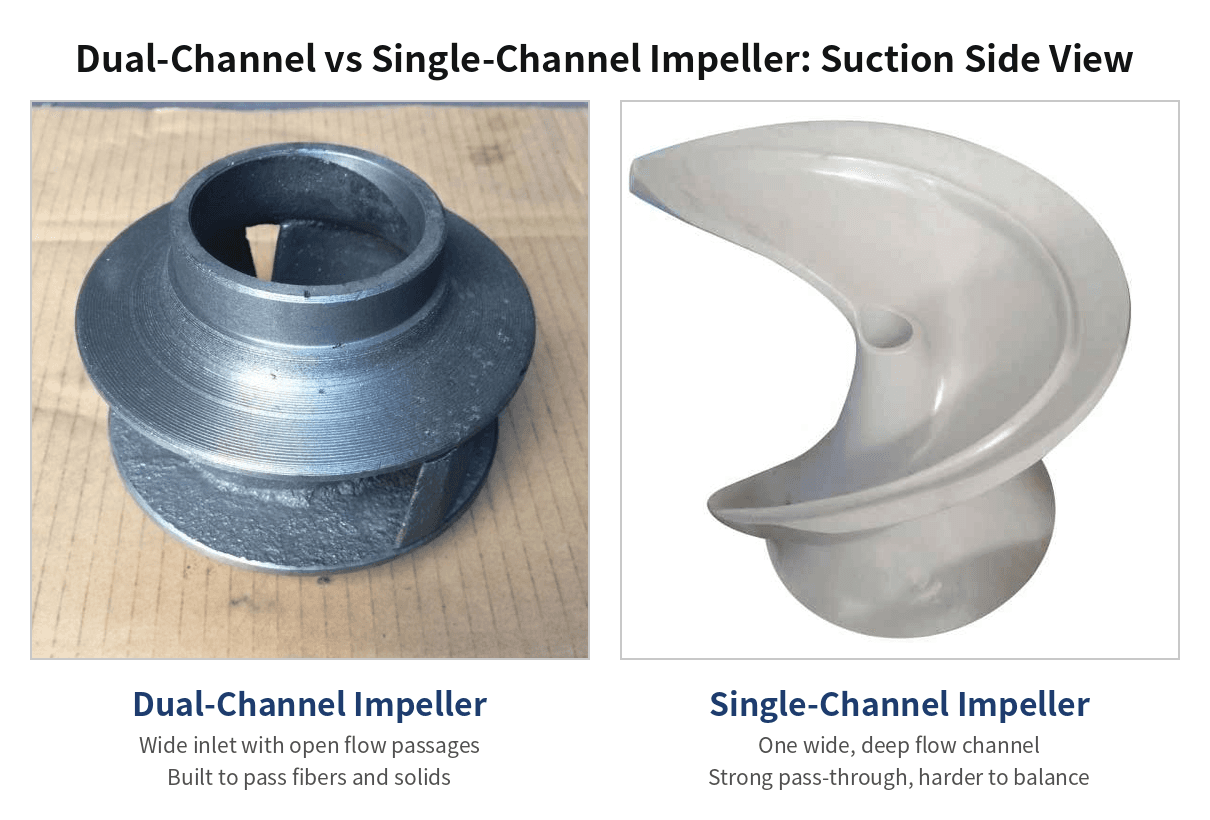
Once the flow-channel design is settled, the next decision is material. Submersible sewage pump impellers are most commonly cast from cast iron or machined and cast in 304 stainless steel, and the right choice depends less on the pump and more on what’s actually in the water.
Cast Iron Impellers
Cast iron is the most common and most cost-effective option. It has good strength and decent resistance to abrasion from grit and general solids in typical sewage. Its weak point is corrosion resistance: in wastewater with notable acidity, alkalinity or high salinity, cast iron surfaces can corrode over time, which gradually degrades hydraulic performance and shortens service life. For municipal sewage and general industrial effluent without strong corrosive characteristics, cast iron is usually sufficient and remains the most widely used material.
304 Stainless Steel Impellers
304 stainless steel offers noticeably better corrosion resistance, which matters for wastewater with salt content, mild acids or alkalis, or in food processing and chemical plant effluent where corrosion sensitivity is a real concern. It also tends to keep a smoother flow surface over time, since it doesn’t rust the way cast iron can. It costs more upfront, but in a corrosive environment the lower replacement frequency usually makes it the more economical choice over the life of the pump. It’s worth noting that for highly aggressive waste streams — high-concentration acids or alkalis, for instance — even 304 may not be enough, and 316 stainless steel or another specialty alloy may be needed instead.
Material and Channel Design Work Together
Whether a dual-channel impeller is cast in iron or 304 stainless steel, the clog-resistance and balance advantages of the channel design itself don’t change. Material mainly affects corrosion and wear resistance, not the hydraulic behavior that comes from the channel shape. As a rough rule: wastewater that’s mostly gritty or high in solids favors cast iron on cost grounds; wastewater that’s corrosive — salty, acidic, alkaline or chemically active — favors 304 stainless steel.
Questions Worth Answering Before You Choose
Before settling on a material, it helps to know the approximate pH range of the wastewater, whether there’s meaningful salt or chemical content, and whether the solids present are mostly soft organic matter or harder grit and sand. Sharing those details with the manufacturer is what actually gets you an impeller that lasts, rather than one that has to be replaced ahead of schedule because the material didn’t match the water.

 Submersible Sewage Pumps