How to Choose a Small Submersible Sewage Pump: Guide
Model: 50QW15-15-1.5
Practical guide to selecting a small submersible sewage pump. Learn how to match flow, head, pipe size and motor power with the 50QW15-15-1.5 as a real example.
One of the most common questions we get from customers is simple: “I need a pump for my basement / project. Which model should I buy?” Instead of guessing from a catalog, it helps to work through a few numbers first. In this article, we walk through a real example — the 50QW15-15-1.5 — and show how the selection process actually works.
Step 1: Know the Flow and Head You Really Need
The two numbers that matter most are flow (Q) and head (H). Flow is how much water you need to move per hour; head is how high you need to push it. The 50QW15-15-1.5 is rated at 15 m³/h at 15 m head. That means it can move 15 cubic meters of sewage every hour while lifting it 15 meters vertically.
A quick tip: don’t size the pump at the exact numbers on paper. Add a 10–15% margin for pipe friction, elbows and future wear. A pump that is too small will run constantly and burn out; one that is too large wastes electricity and shortens its life.
Step 2: Match the Pipe Diameter
The 50QW15-15-1.5 has a DN50 (2 inch) discharge. If your discharge pipe is too small, the pump will work against extra friction and the actual flow will drop. As a rule of thumb, the discharge pipe diameter should match or be one size larger than the pump outlet.
Step 3: Check the Motor Power
This model uses a 1.5 kW motor at 2900 rpm. At 380V three-phase power, the starting current is manageable for most standard electrical supplies. If your site only has single-phase power, you will need a different model — let us know and we will suggest an alternative.
Step 4: Confirm the Installation Space
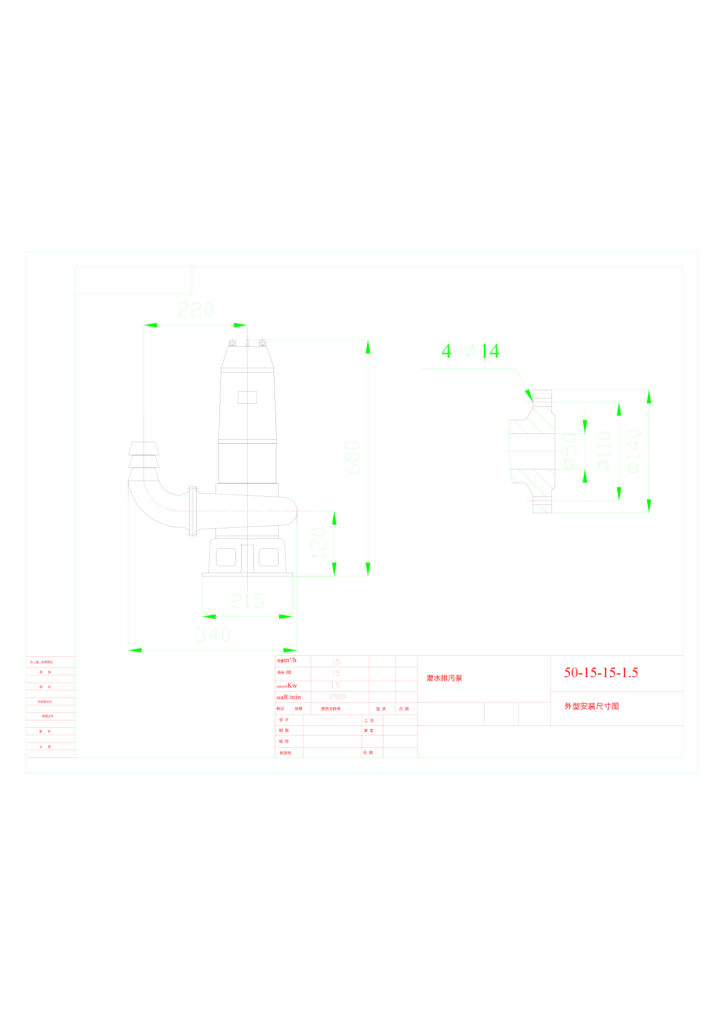
Before ordering, check whether the pump will fit in the sump or pit. The overall height of this unit is about 600 mm and the footprint is roughly 340 × 215 mm. The drawing below gives the exact outline:
Outline and flange dimensions for 50QW15-15-1.5 — verify your sump space before order
Step 5: Think About What You Are Pumping
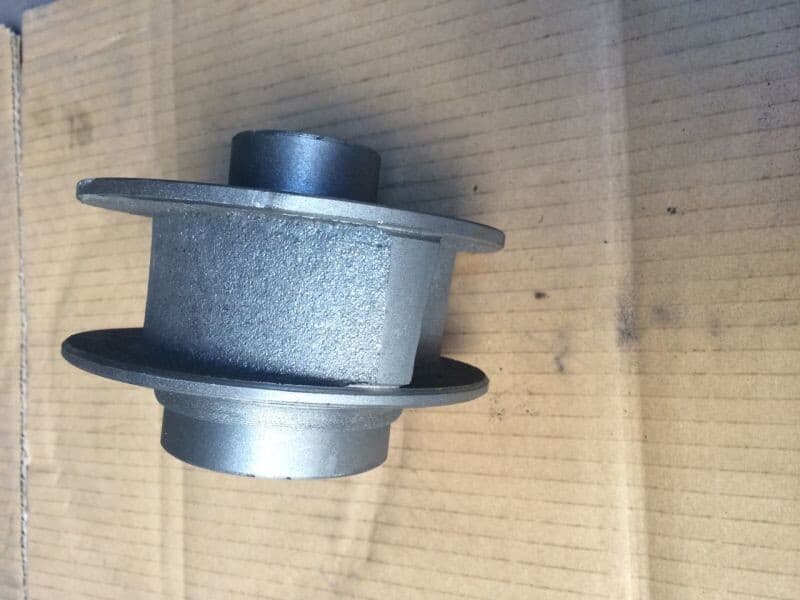
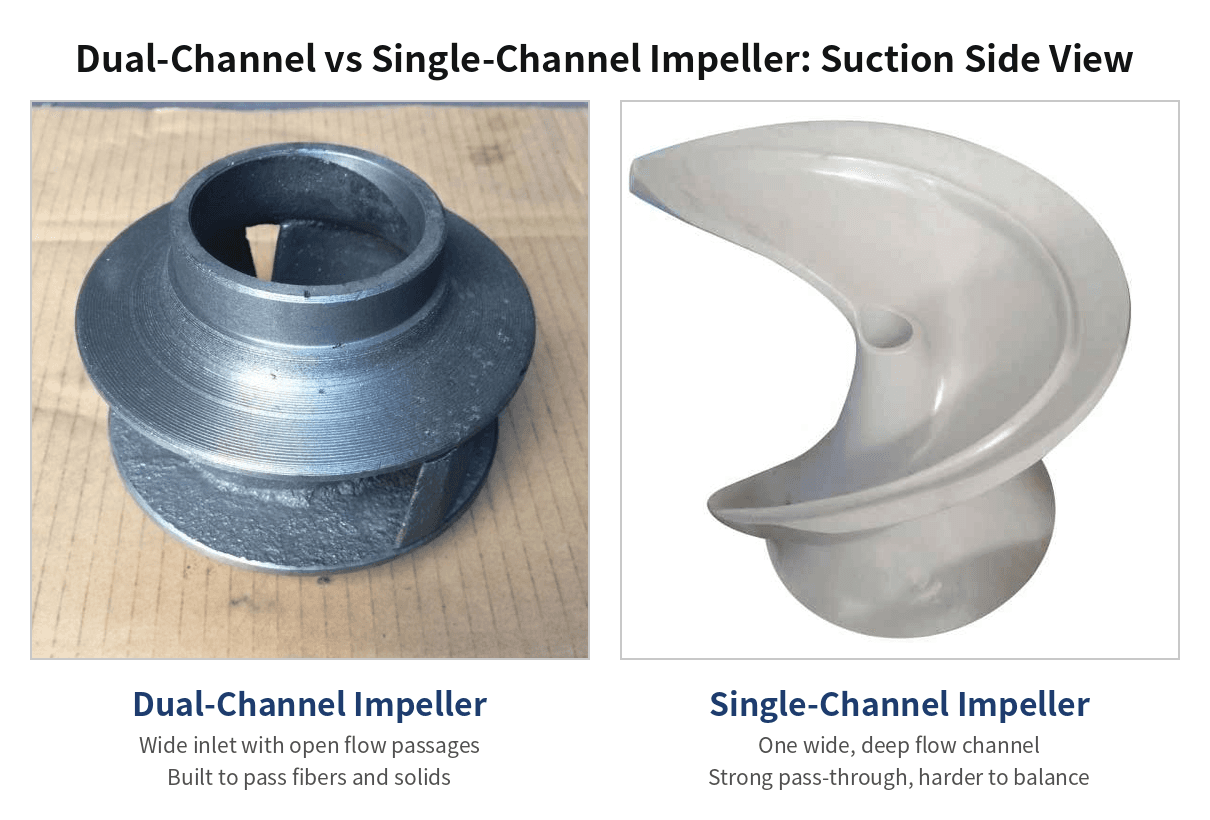
Not all sewage is the same. If the liquid contains long fibers, rags or food particles, a double-channel impeller or even a cutter-type pump is a better choice than a standard vane impeller. Tell us what fluid you are handling and we will recommend the right impeller and seal material.
Common Mistakes to Avoid
Choosing by price only. A cheap pump that clogs every week costs more in downtime than the money you save.
Ignoring the mechanical seal. This is the wearing part that fails first. Ask what material the seal is made of (SiC/SiC is better for sewage).
Forgetting the float switch. Without automatic level control, the pump will run dry and burn out.
Not checking the voltage. 380V three-phase is standard for export; confirm your site power before order.
Ready to Order?
If your requirements line up with the 50QW15-15-1.5 — 15 m³/h, 15 m head, DN50 discharge, 1.5 kW — we can quote you immediately. If not, send us your flow, head and pipe size, and we will recommend the correct QW model from our range.

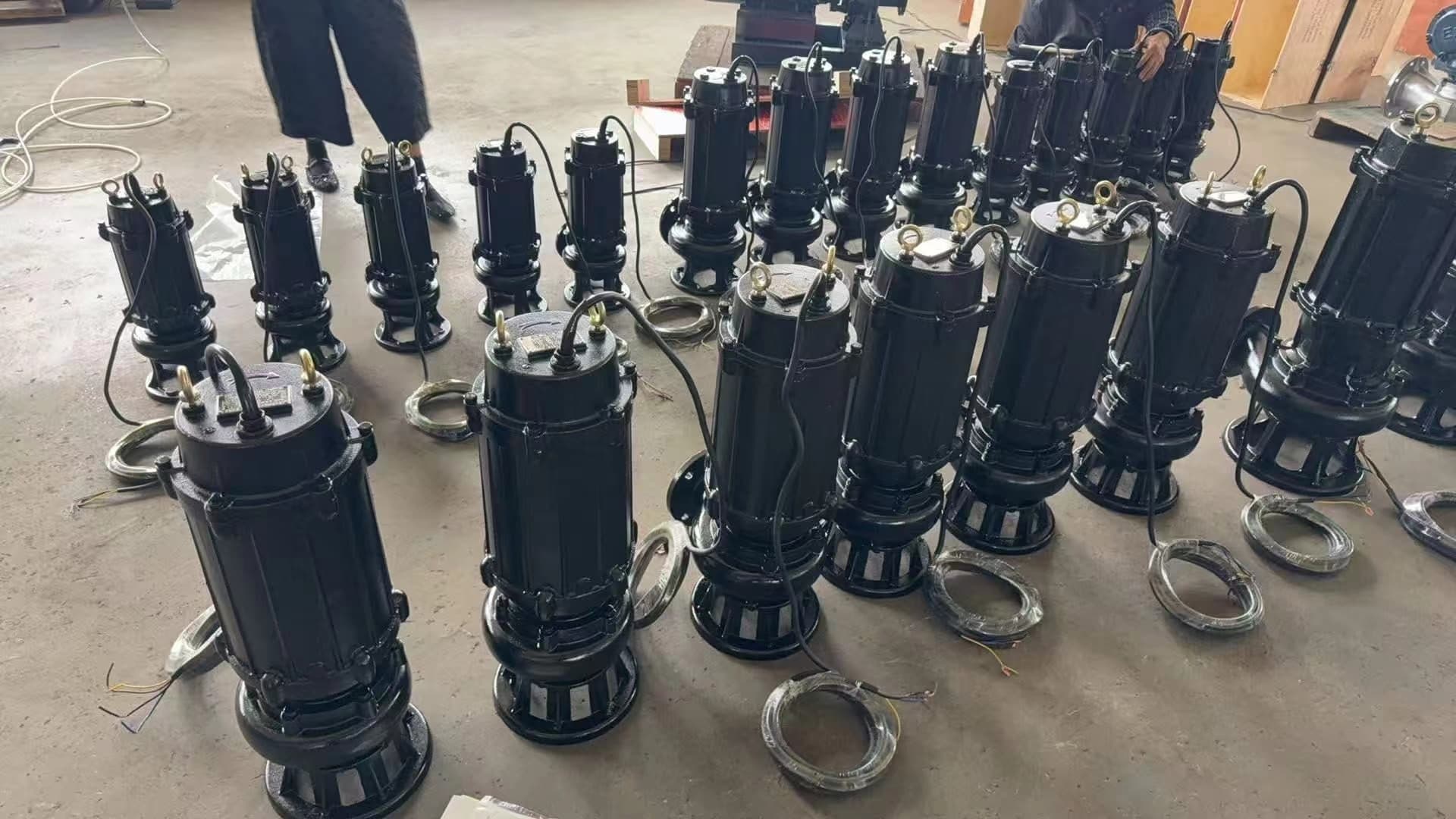 Submersible Sewage Pumps