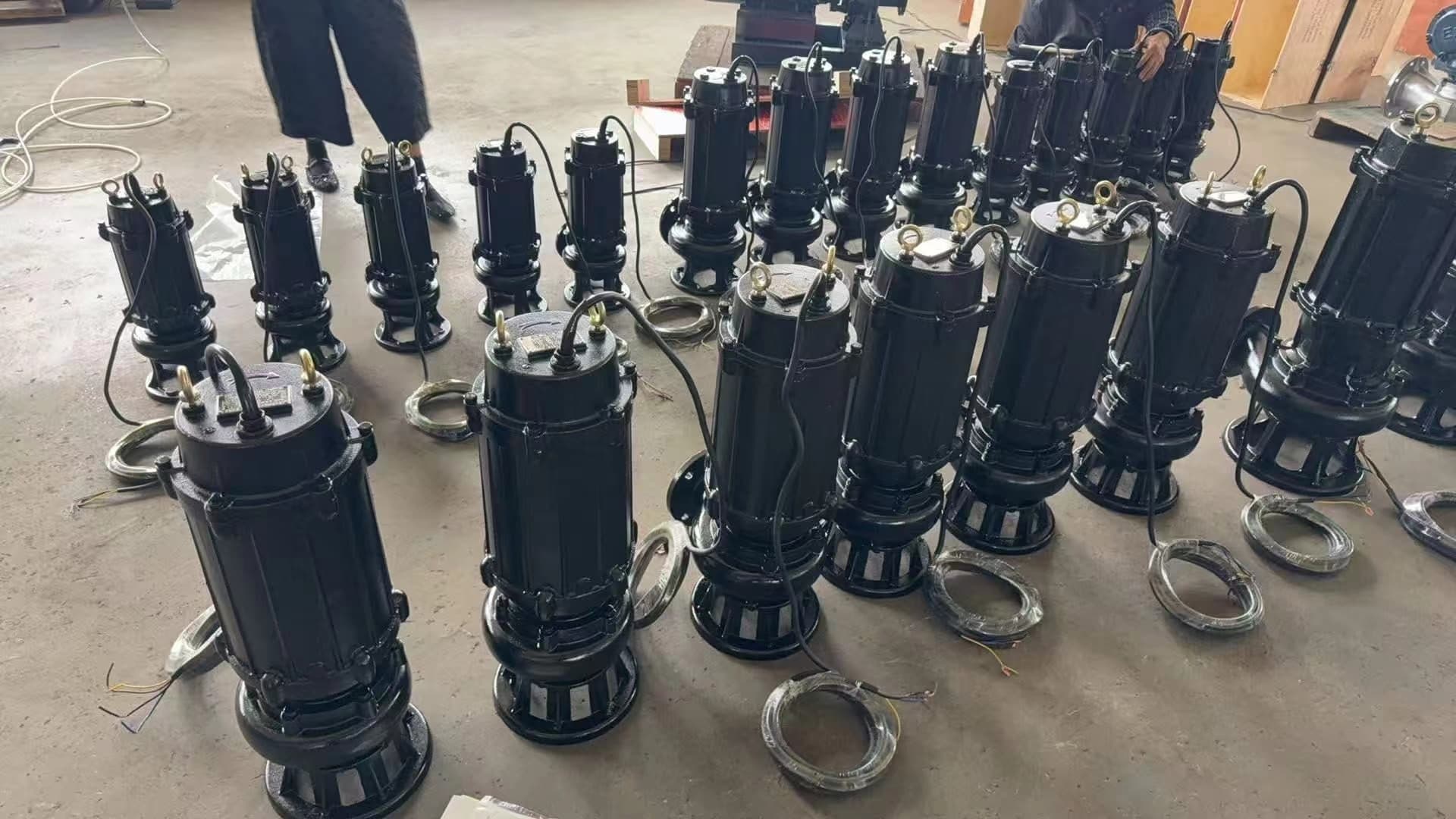
A sewage pump may be easy to install once, but a good pumping station also needs to be maintainable. This is where a guide rail automatic coupling system becomes useful. Instead of requiring workers to enter the wet well to disconnect the pump, the pump can be guided into position from above and coupled to the discharge connection.
Guide Rail Installation in Practice
The WQ/QW product information supplied for this series describes a double-guide-rail automatic coupling system. During installation, the pump is lowered along the guide rails until it reaches the coupling position. For maintenance, the pump can be lifted back up without requiring personnel to work inside the sewage pit. The arrangement is particularly useful for permanent pumping stations.
A guide rail system also makes repeat installation more predictable. Once the base and discharge connection are correctly installed, the pump can be removed for inspection and returned to service without rebuilding the complete pipe connection. This can reduce the amount of work involved in planned maintenance.
Safety During Installation and Maintenance
Safety still matters. The supplied installation instructions specify that lifting should be performed with the designated lifting points and that the electrical cable must never be used as a lifting rope. Electrical grounding must also be completed according to applicable requirements. Personnel should not enter or work near the pump while it is energized.
When a Mobile Setup Makes More Sense
Not every application needs a fixed coupling system. The same product family can also use a mobile installation arrangement, where the pump is supported by a frame and connected to a flexible discharge hose. This approach is practical for emergency drainage, temporary bypass pumping and maintenance projects.
Selecting the Right Pump and Power Supply
The hydraulic pump selection remains important regardless of the installation method. A single-channel or twin-channel impeller can provide a relatively open passage for wastewater containing solids and fibers. The source material also describes automatic level control through a float switch and optional protection through a dedicated control cabinet.
For projects using 415 V, 50 Hz power, the electrical configuration can be specified during ordering. The final motor and control cabinet should be checked against the local power supply and the selected pump duty.
A guide rail system is only as good as the day someone has to use it under pressure. It is worth designing the installation with that day in mind, not just the day it is commissioned.


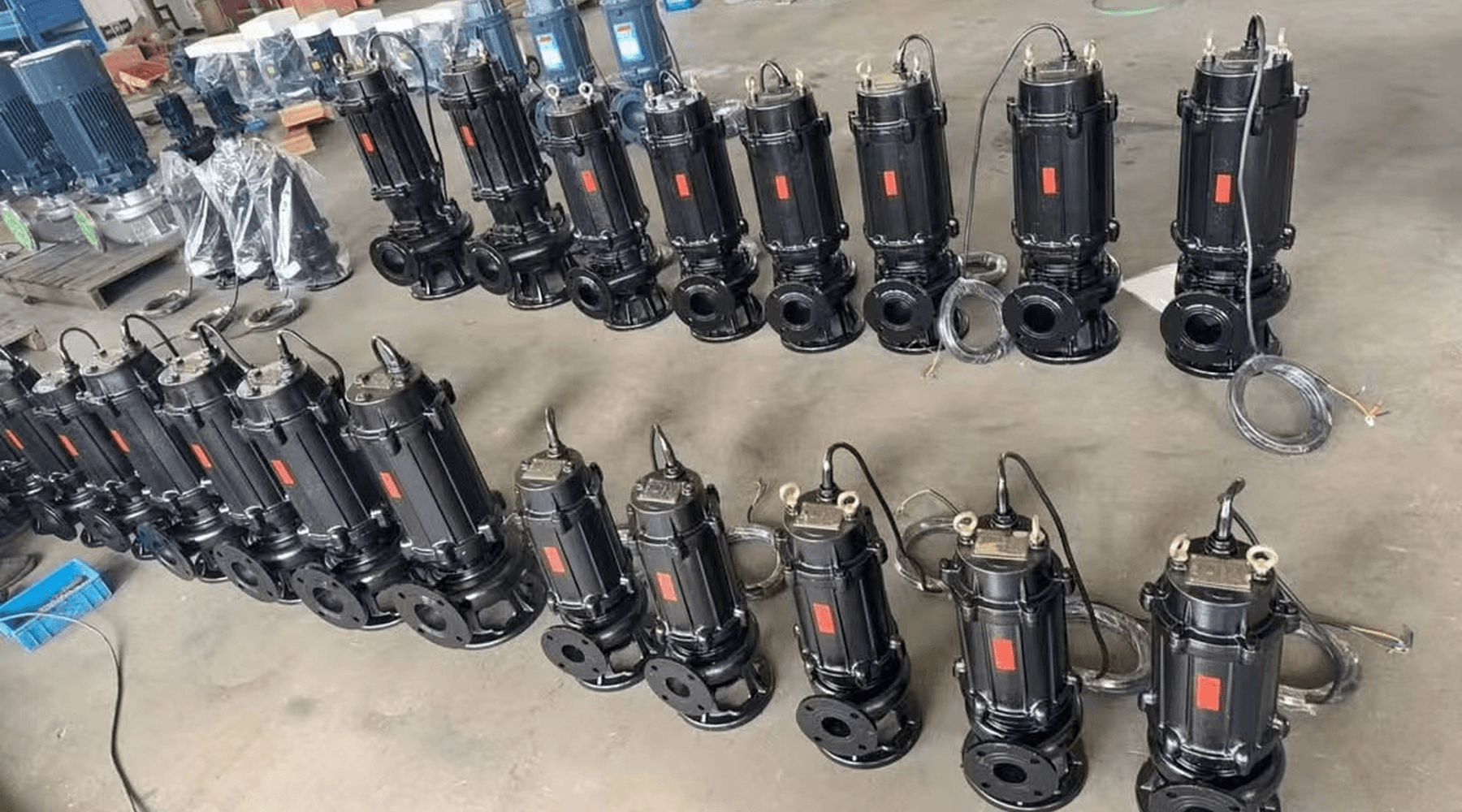 Submersible Sewage Pumps