
Vibration and Noise in Pipeline Pumps: Where They Come From
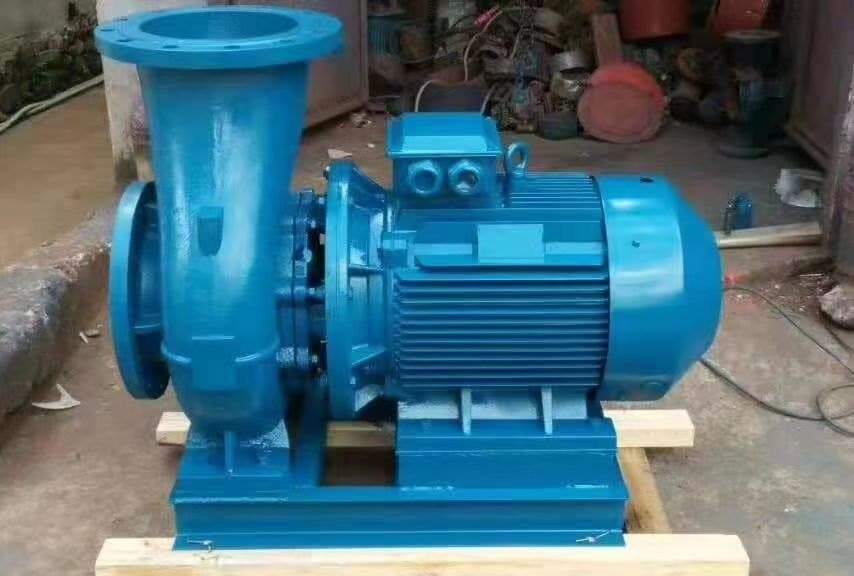
A pipeline pump should run with little more than motor hum. When it shakes or rattles, the cause is usually one of these.
- Anchor bolts loose, or the base not grouted solid: tighten and fill
- Pipes pulling on the casing, or poor alignment on horizontal pumps: support the pipes, realign
- Cavitation, heard as gravel rattling: lower the suction lift, cut suction losses, check NPSH
- Worn bearings: replace
- Soft or cracked foundation: strengthen it
- Rubbing inside the pump: open and inspect
- Air trapped in the discharge pipe: fit a vent valve at the high point
Vibration isolators
Our catalogue specifies an isolator for each model, from SD41-0.5 pads on small frames to sets of SD61 isolators on the largest. In occupied buildings, fitting them is one of the cheapest ways to keep pump noise out of the rooms.
See also the installation height guide for cavitation.
Products in This Series
 Pipeline Centrifugal Pumps & CDL Multistage Pumps
Pipeline Pumps for HVAC Chilled and Condenser Water Circulation
Vertical inline pumps for chilled water and condenser water loops in HVAC systems: what sets the flow and head, and why closed-loop pressure matters.
 Pipeline Centrifugal Pumps & CDL Multistage Pumps
60 Hz and Special Voltage Pipeline Pumps and CDL Multistage Pumps
Pipeline and multistage pumps for 60 Hz and 380, 440 or 460 V supplies. Why a 50 Hz pump overloads on 60 Hz and what to send us.
Pipeline Centrifugal Pumps & CDL Multistage PumpsA, B and C Trimmed Impellers: Matching a Pipeline Pump to the Duty
The A, B and C at the end of a pipeline pump model mark trimmed impellers. How trimming lowers head and power, with the 40-250(I) family as an example.
Need a pump for your application?
Our engineers respond to technical inquiries within 24 hours.
Get a Quote