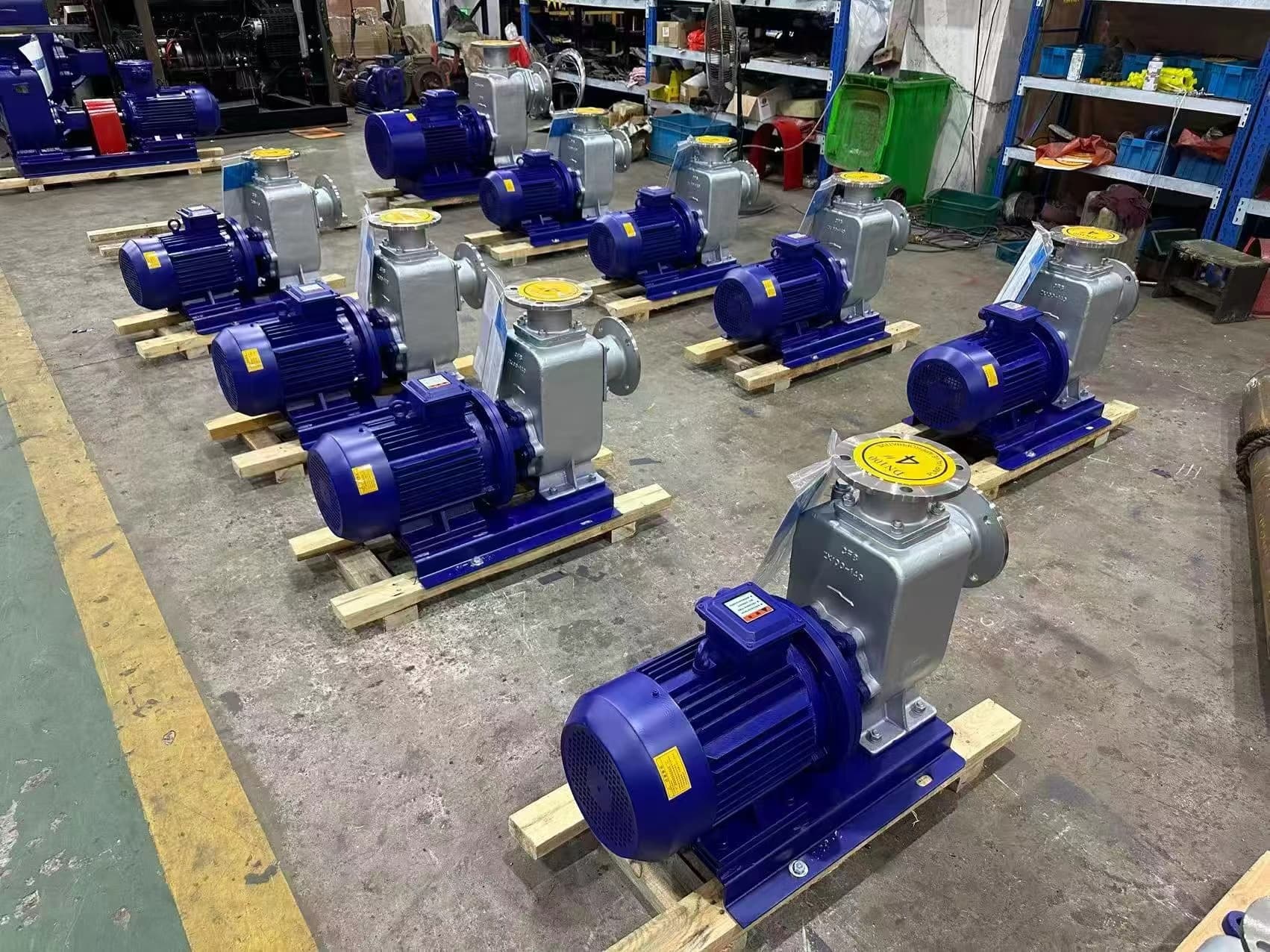
Most trouble with a self-priming pump is born at installation — a leaky suction line or a dry pump body, and it “won’t work” on day one. Set a ZWL direct-coupled self-priming sewage pump up properly and it primes and runs for years. Here’s the practical checklist.
Before you start
- Check the base is level and solid, and that all fasteners are tight.
- Look for shipping damage and turn the coupling/shaft by hand — it should spin freely, with no binding or odd noise.
- On a direct-coupled unit, confirm pump-to-motor concentricity; the allowable misalignment is about 0.1 mm.
- Mount the pump so its inlet is above the pump shaft centreline, so it retains its stored priming liquid.
The suction line — get this right
- Keep the suction lift within 5.5 m and the pipe as short as possible, with few bends.
- Seal every joint — an air leak on the suction side is the number-one reason a pump won’t prime.
- Fit a strainer with an open area about 2–3 times the suction pipe’s cross-section.
- Support the pipework independently — the pump body must never carry pipe loads.
- Make sure the casing and pipes are clear of debris, and that static earthing/grounding resistance meets spec.
First start-up
- Open the filling valve on top and add liquid to at least two-thirds of the pump body. (After this first fill, it self-primes on every start — no need to re-prime.)
- Bump the motor and check rotation — viewed from the motor end it should turn clockwise. Never run it in reverse.
- Start it, and give it time to prime and pull the liquid up.
- After 3–4 hours of running, do a final check — the bearing housing temperature should stay below 70°C.
If it won’t prime, check the suction side for air leaks first — that’s almost always the cause.
Install-relevant specs
- Self-priming height: 4.5–5.5 m; suction pipe ≤10 m
- Coaxiality tolerance: ~0.1 mm
- Bearing temperature: ≤70°C
- Medium temperature: ≤80°C
- Material: cast iron or stainless steel

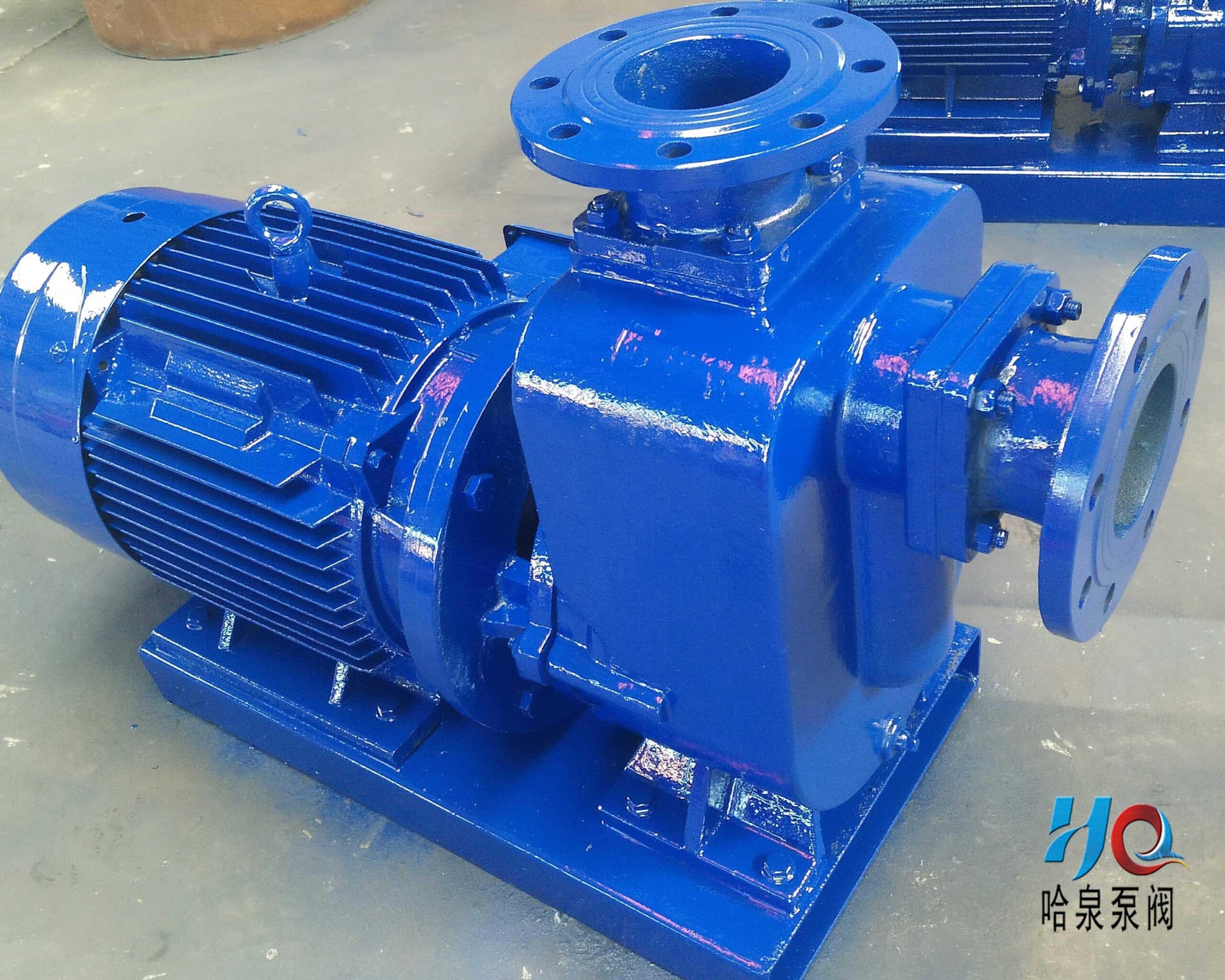
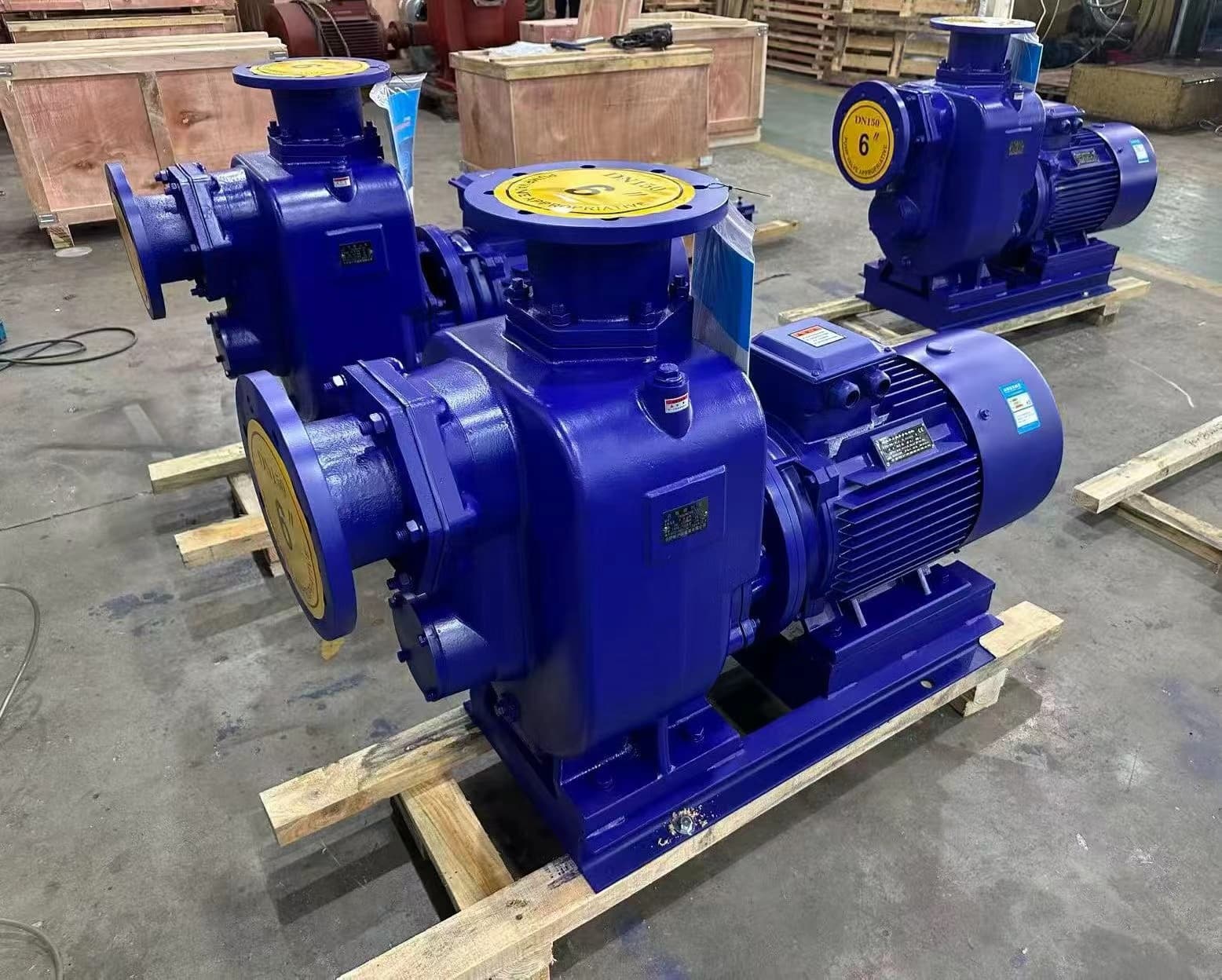 ZWL Direct-Coupled Self-Priming Sewage Pump