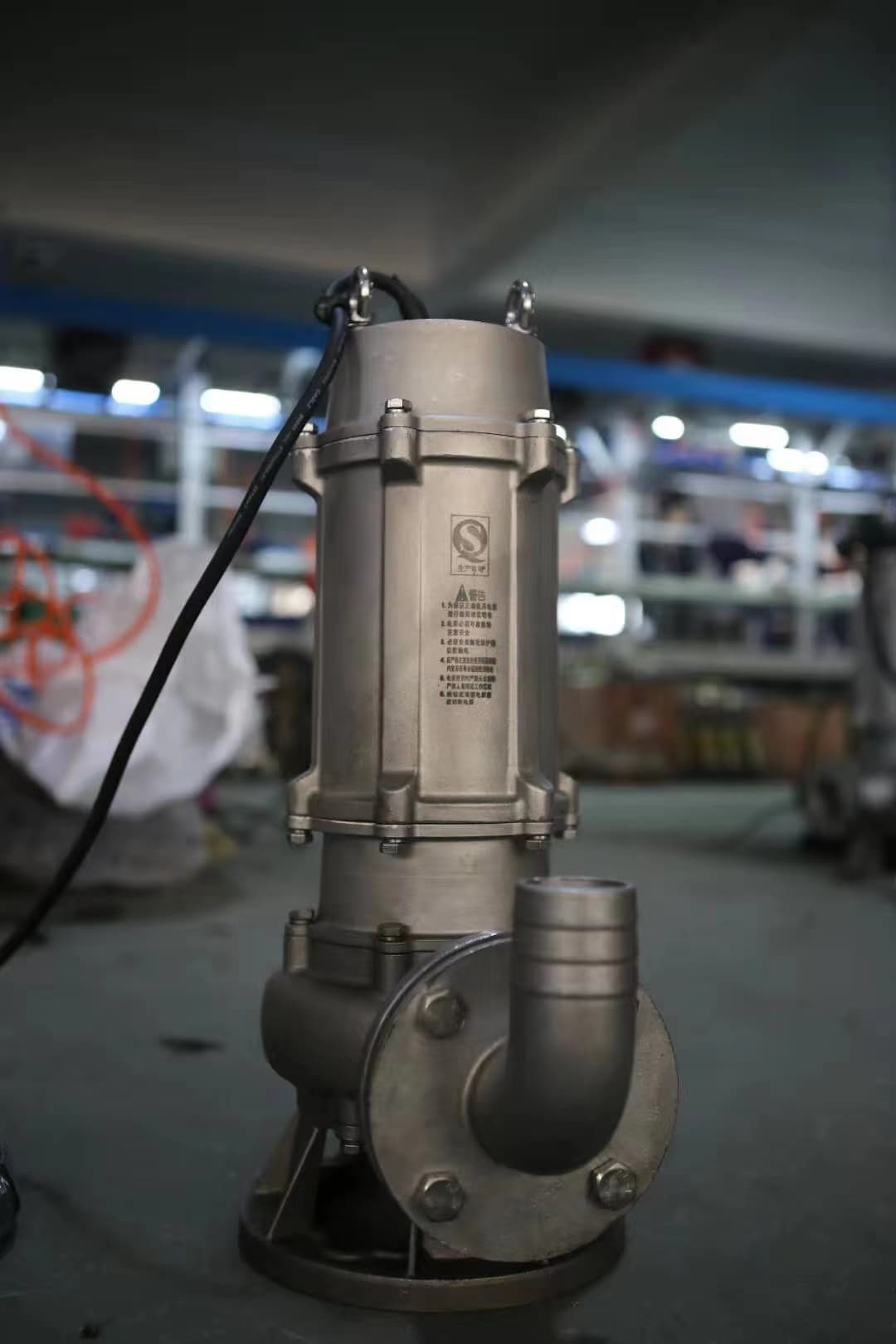
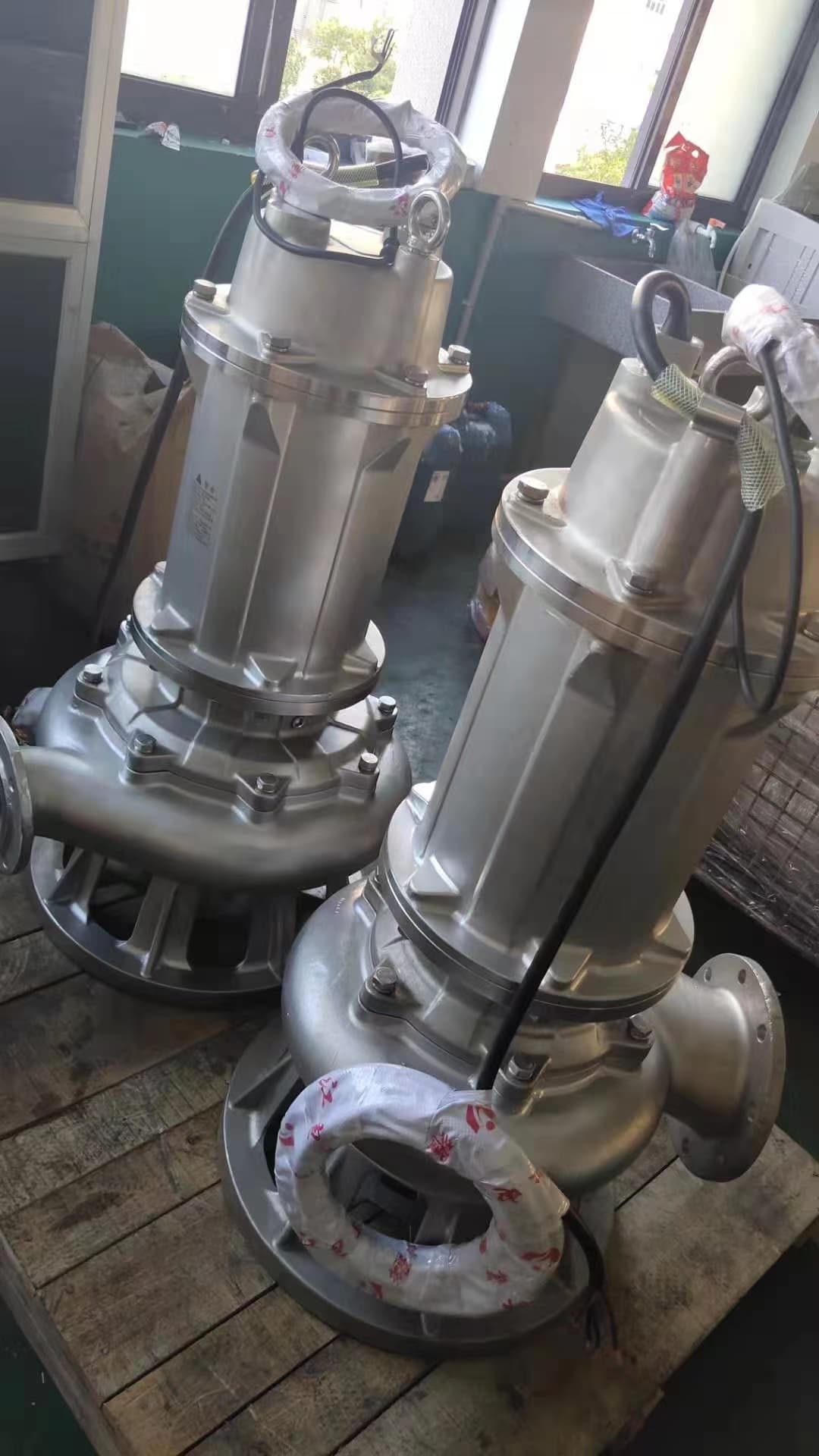
GNWQ Cutter Sewage Pump – 220V vs 380V, How to Choose Voltage
GNWQ cutter pumps come in single-phase 220 V and three-phase 380 V, and picking the right one matters. The rule of thumb is simple: small pumps for homes and small premises run on 220 V, while anythin…
GNWQ cutter pumps come in single-phase 220 V and three-phase 380 V, and picking the right one matters. The rule of thumb is simple: small pumps for homes and small premises run on 220 V, while anything larger — and all industrial and municipal duty — uses 380 V.
Which one for you?
The smallest models (around 0.75–1.5 kW) are offered in 220 V so they work on an ordinary domestic supply — ideal for a house, shop or small guesthouse. From roughly 2.2 kW upward, GNWQ pumps are three-phase 380 V, which suits the higher power and steady running that industrial and municipal sites demand.
If you’re not sure what supply your site has, tell us and we’ll match the pump to it.
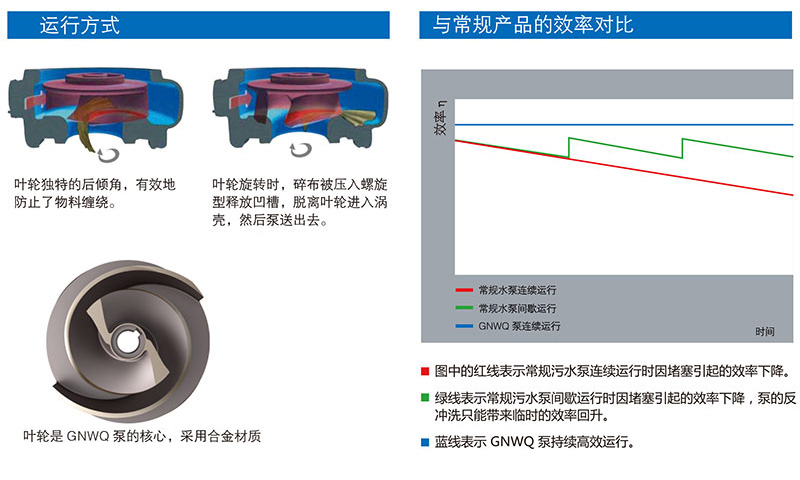
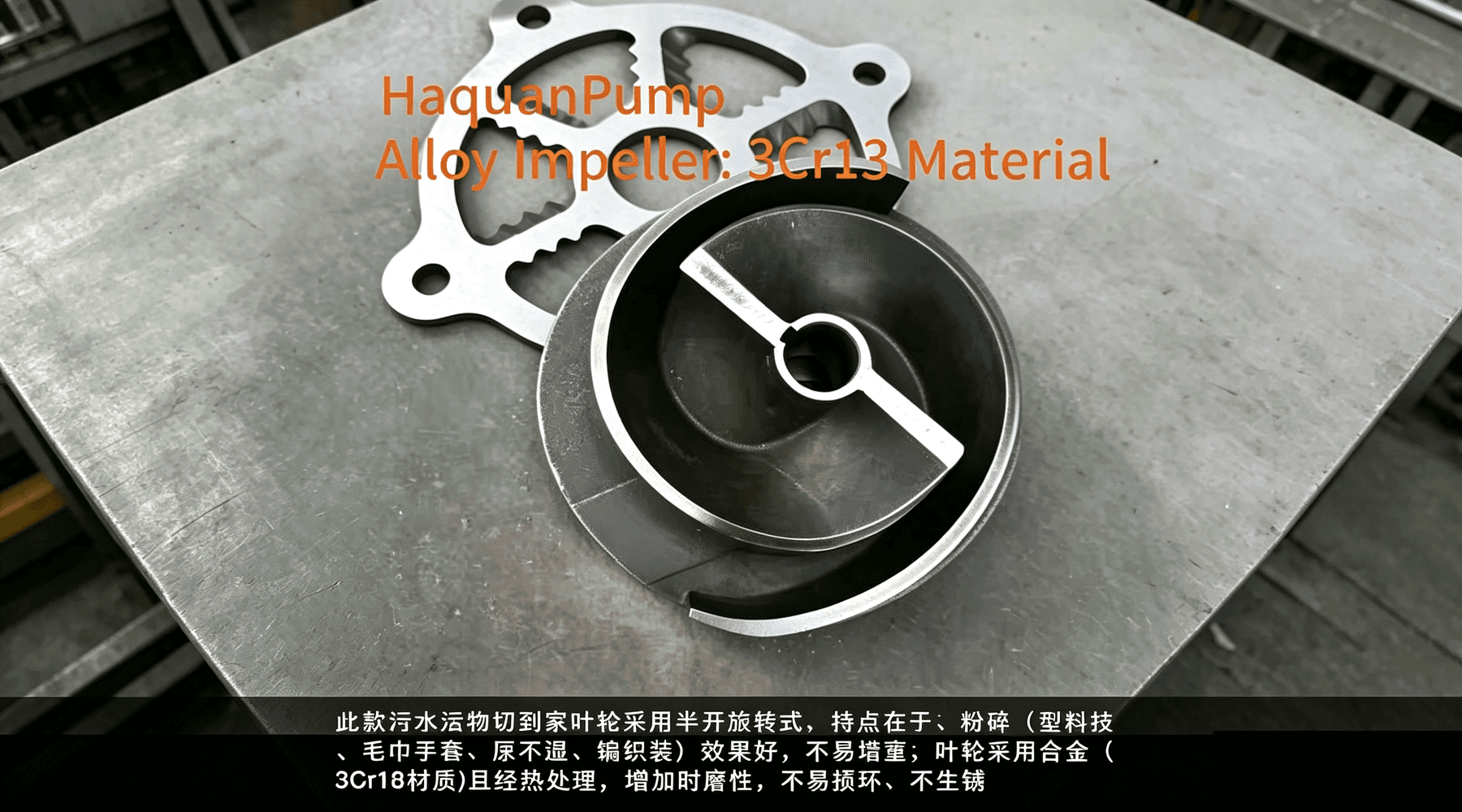
GNWQ Cutting Submersible Sewage Pump Impeller
Applications: domestic 220V drainage, small commercial premises, industrial 380V duty, municipal stations, farm and factory wastewater
Fibrous, rag-laden or hard-to-pump sewage giving you trouble? The HAQUANPUMP engineering team will help you specify the right GNWQ cutter pump — reach out any time.
The 100GNWQ100-25-15S is a precision-cast SS304 cutter sewage pump for chemical plants needing both corrosion resistance and a tall lift — 100 m³/h at 25 m head, 15 kW.
The 150GNWQ150-11-11S is a precision-cast SS304 cutter sewage pump for desalination plants and coastal works — high-volume, low-head handling of brine-laden effluent. 150 m³/h at 11 m head, 11 kW.
The 100GNWQ100-20-11S is a precision-cast SS304 cutter sewage pump for large corrosive process duties — 100 m³/h at 20 m head, combining chemical resistance, volume and lift. 11 kW.

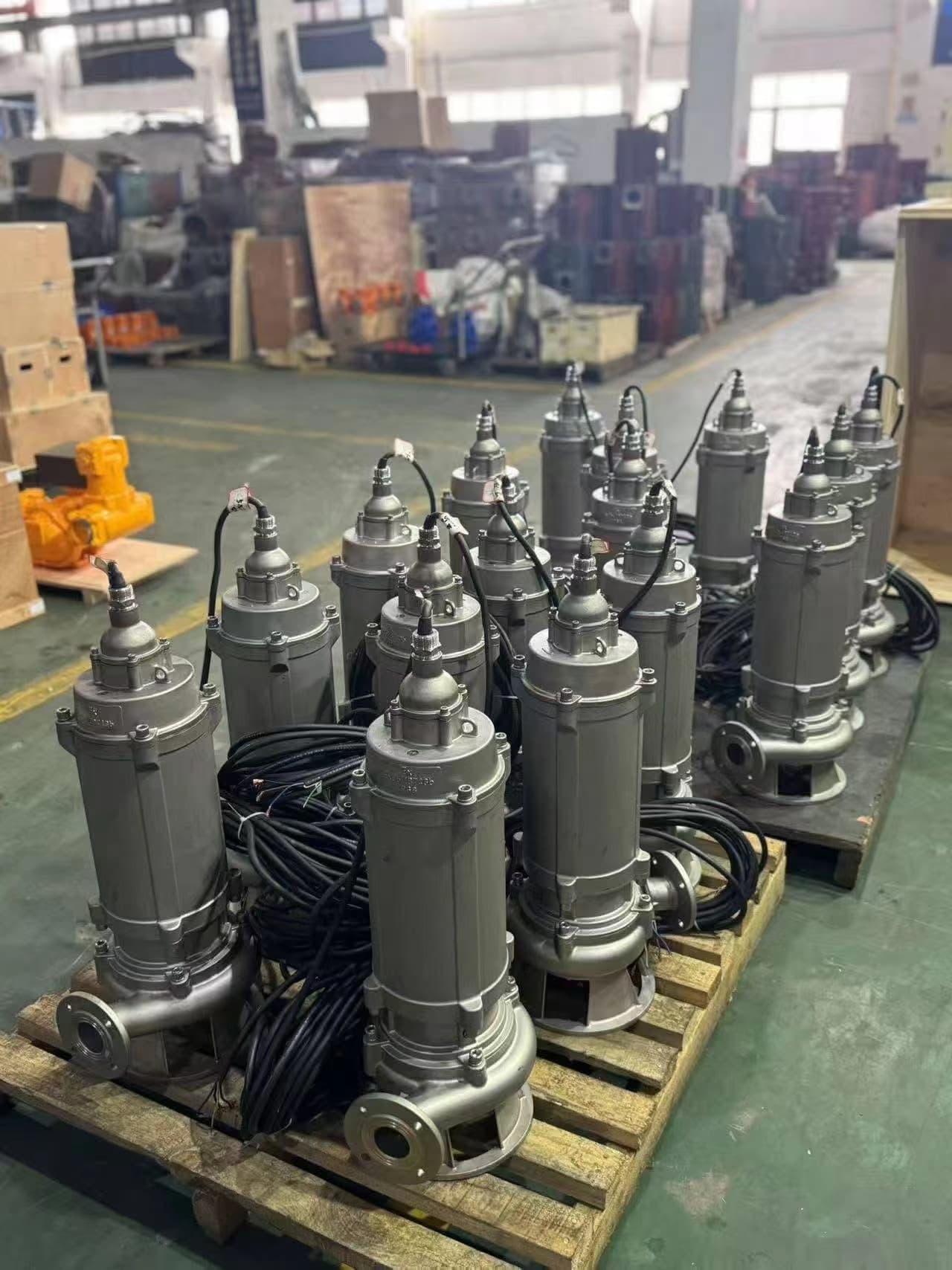
 GNWQ Cutter Submersible Sewage Pump