How Does a Sewage Pump Work? Types, Cycle & Maintenance Guide
July 16, 2026 3 min read Haquan
A plain-language guide to how a sewage pump works — collection to discharge — plus the main pump types and simple maintenance tips from Haquan’s engineers.
Sewage pumps do one of the least glamorous but most important jobs in any building or plant: moving the wastewater that gravity alone can’t. Yet most people have no idea what happens after the water disappears down the drain. Here’s a clear, no-jargon look at how a sewage pump actually works — plus the main types and a few habits that keep one running for years.
How a sewage pump works, step by step
Modern sewage pumping is almost entirely automatic. From the moment wastewater arrives to the moment the pump goes back to sleep, the cycle runs on its own:
1. Collection. Domestic sewage and factory wastewater flow through pipes into a collection tank or sump. A screen at the inlet catches the larger solids — rags, debris, waste — while a float switch inside the tank keeps watch on the water level.
2. Start-up. When the level rises to a set point, the float switch sends a start signal to the motor. No operator needed — the pump wakes up on demand.
3. Intake. The motor spins the pump shaft, which drives the impeller at high speed. That spinning impeller generates centrifugal force, drawing sewage into the pump and flinging it outward at speed.
4. Discharge. As the fast-moving sewage passes through the volute — the spiral casing — it slows down and its kinetic energy converts into pressure. That pressure pushes the wastewater out of the outlet and on toward the sewer or treatment plant.
5. Stop. As the tank drains back to a safe low level, the float switch sends a stop signal. The pump shuts off and drops into standby, ready for the next cycle.
Collect, start, draw in, push out, stop — that loop repeats around the clock, usually without anyone noticing. Which is exactly the point.
Common types of sewage pump
Not every job suits the same pump. The main families:
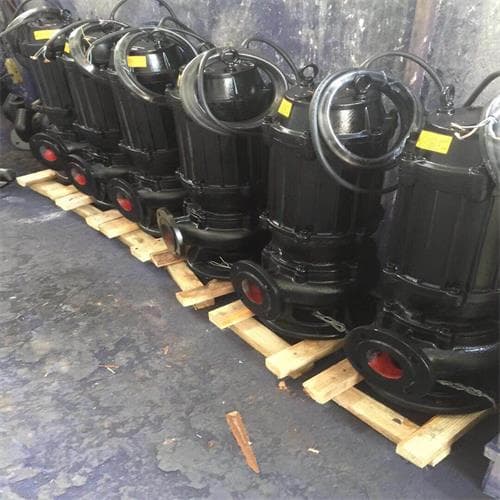
Submersible sewage pumps sit inside the tank, submerged in the wastewater — quiet, compact and self-cooling.
Self-priming pumps sit outside the pit and draw the sewage up to themselves, which makes servicing far easier.
Grinder / cutter pumpsshred solids before pumping — ideal where rags and debris would clog an ordinary pump.
Choosing between them comes down to your flow, head, solids size and the fluid itself.
Keeping a sewage pump healthy
A sewage pump is low-maintenance, not no-maintenance. A few simple habits go a long way:
Test the float switch now and then — a stuck float is the single most common cause of a flooded pit or a dry-run pump.
Clean the inlet screen so solids don’t build up and choke the intake.
Inspect the impeller and seals for wear or clogging, especially if the flow starts to drop off.
Listen and watch — odd noise, vibration, or a pump that never stops usually means something needs attention before it fails.
Built for the job
At Haquan we manufacture the full range — submersible, self-priming, grinder, diaphragm and pipeline pumps — and match each one to the exact duty. If you’re specifying a sewage pump or troubleshooting one, send us your flow, head and fluid, and our engineers will help.