
How to Calculate Total Head for a Sewage Pump
If a pump looks powerful enough on paper but disappoints in real life, the culprit is almost always head — specifically, someone measured the vertical lift and forgot the rest. Let me show you how to get the *total* head right, because it’s the number that decides whether your pump actually delivers.
Total head = static head + friction head
That’s the whole idea. Two parts.
Static head — the easy part
Static head is the straight vertical distance from the pump (or the water level it’s pumping from) up to the point where the water discharges. Measure it in metres. If your pump sits at the bottom of a pit and discharges 9 metres up at ground level, your static head is 9 m. Simple.
Friction head — the part people skip
As water moves through pipe, it loses energy to friction. Every metre of pipe, every elbow, every valve, every fitting adds resistance — expressed as extra metres of head the pump has to overcome.
Friction depends on:
- Pipe length — longer pipe, more friction.
- Pipe diameter — narrower pipe, dramatically more friction. Undersized pipe is a classic mistake.
- Bends and fittings — each one adds resistance, like a short length of extra pipe.
- Flow rate — pump more water and friction rises steeply.
For short, generously-sized pipe runs, friction might only add a metre or two. For long runs of narrow pipe with lots of elbows, it can add *more than the static lift itself*. That’s how a “9 metre lift” job quietly becomes a 14-metre-head job.
A worked example
- Static lift: 9 m
- 40 m of horizontal pipe plus fittings: friction works out to roughly 4 m of head at your flow
- Total head ≈ 13 m, not 9 m.
You’d size the pump to deliver your required flow at 13 m of head — not 9. If you’d sized it for 9, it would move far less water than you expected once installed.
Why it matters for self-priming pumps especially
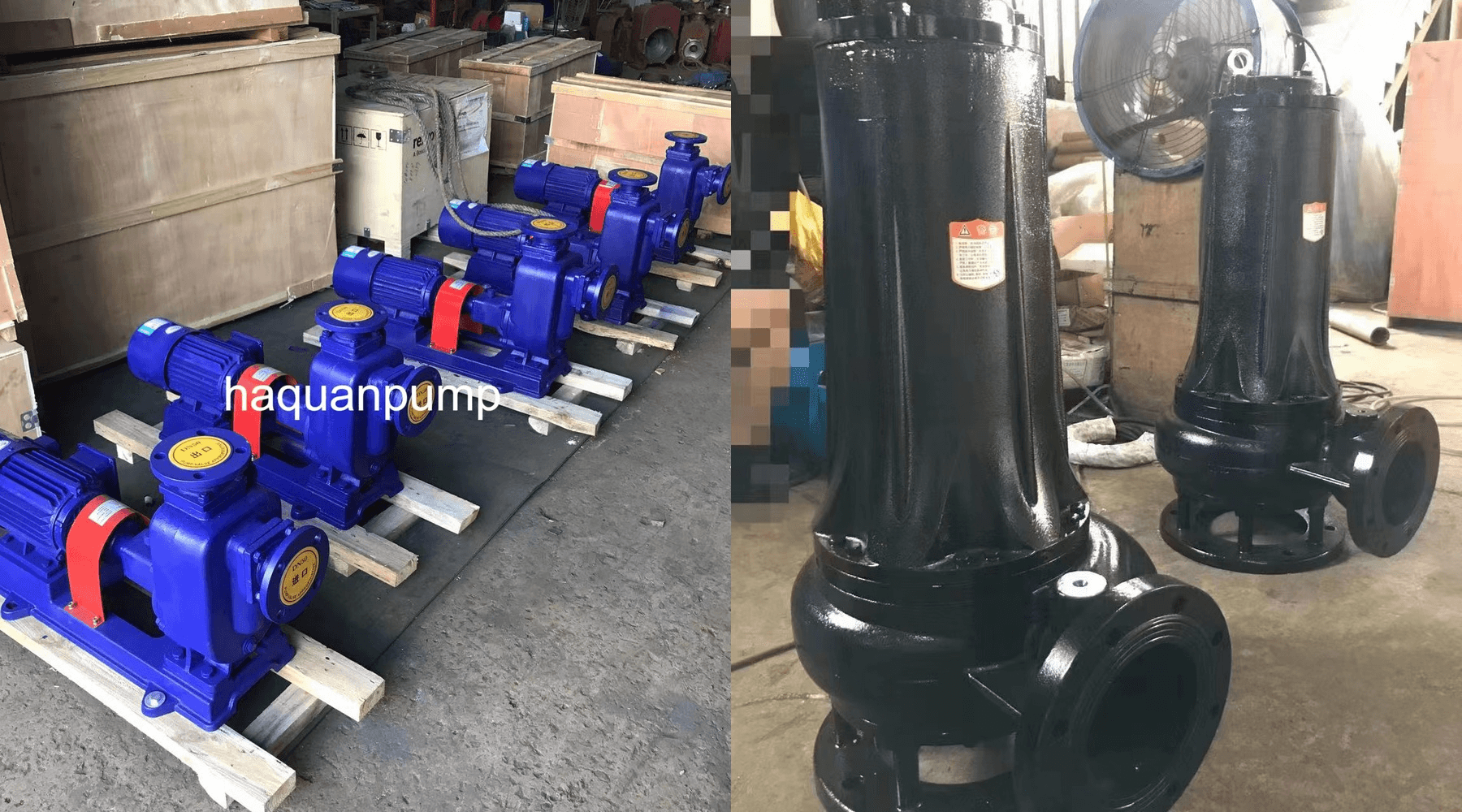
With a self-priming sewage pump there’s also the suction lift — how far below the pump the water sits. That eats into performance too, so it needs to be counted. With a submersible sewage pump the pump is already down in the liquid, so suction lift isn’t an issue, but discharge friction still is.
Don’t want to do the maths?
Totally fine. Send us: the vertical lift, the pipe length, the pipe diameter, and how many bends. We’ll calculate the total head and pick a pump that hits your flow at that head with a bit of margin to spare.
Need a pump for your application?
Our engineers respond to technical inquiries within 24 hours.
Get a Quote